Signature Padel Shots: Technical Guide & Execution
Padel features a distinct technical shot vocabulary tailored for glass wall physics, net transitions, and doubles positioning. Master the six core strokes that define competitive play.
The Universal Continental Grip
In padel, over 95% of all shots—including serves, volleys, bandejas, and wall returns—are executed using the Continental Grip (often called the hammer grip). This neutral hand position eliminates the need to switch grips during rapid exchanges at the net and naturally sets the racket face to apply the underspin required for low wall rebounds.
La Bandeja (The Tray Shot)
Designed to preserve the dominant offensive net position when pushed back by a deep defensive lob, eliminating the risk of a mishit power smash.
Tactical Application: Used when an opponent’s lob forces you 2 to 3 meters behind the net line. Rather than letting the ball bounce or attempting a high-risk jump smash, the bandeja returns a low-bouncing slice deep into the opponent’s glass corners, buying time to reclaim the net.
Step-by-Step Execution
- Turn sideways immediately with your chest facing the side glass and your non-dominant hand pointing up toward the ball.
- Prepare the racket flat and open at eye height (resembling a waiter carrying a tray).
- Do not strike at full vertical arm extension; let the ball drop slightly to head level.
- Cut through the lower half of the ball with downward slice from high to low, finishing across your body.
Target Placement: Deep into the opponent’s corners so the ball stays low and dies close to the turf after rebounding off the back glass.
La Víbora (The Viper)
An attacking overhead struck with heavy side-spin that hugs the turf and ricochets unpredictably off the glass walls.
Tactical Application: Executed when an opponent delivers a medium-depth lob that you can strike with forward momentum. The side-spin causes the ball to curve in the air and bite violently into the corner glass, making defensive returns exceptionally difficult.
Step-by-Step Execution
- Coil your shoulders aggressively and cock the racket behind your head with an elevated elbow.
- Make contact on the lateral outside edge of the ball (around 2 o’clock for a right-handed player).
- Accelerate your forearm horizontally, brushing around the side of the ball with active forearm pronation.
- Follow through forcefully across your chest to maximize rotational spin rate.
Target Placement: The corner junction where the side glass meets the back glass to produce an erratic lateral bounce.
Remate Por Tres (Smash x3)
An explosive topspin kick smash that rebounds off the opponent’s back glass and flies out over the 3-meter side wall for an unreturnable winner.
Tactical Application: Reserved for short, shallow lobs near the midcourt. When executed with proper upward brush and power, the ball bounces over the side fence, making it impossible to return from inside the court.
Step-by-Step Execution
- Position your feet directly under the falling ball in the front half of the court.
- Arch your back, drop the racket head deeply behind your shoulders, and explode vertically into the strike.
- Apply heavy brush topspin (similar to a kick serve in tennis) at the highest contact point.
- Direct the ball sharply downward into the turf 1 to 2 meters in front of the back glass so it strikes the wall on the upward ascent.
Target Placement: Opponent’s service box floor onto the back glass at high velocity.
La Chiquita
A slow, dipping drive placed directly at the feet of net volleyers to force an upward pop-up and enable your team to advance.
Tactical Application: Used from the baseline when opponents hold a strong net position. Instead of hitting a flat drive that can be easily volleyed down, the chiquita drops below net height before reaching the opponents, forcing them to hit upward.
Step-by-Step Execution
- Disguise your preparation to look like a standard deep baseline drive.
- De-accelerate the swing on contact, applying gentle topspin or flat trajectory just clearing the net cord.
- Ensure the apex of the ball is low so it dips below knee level as it arrives at the net players.
- Step forward in tandem with your partner immediately after hitting to intercept the popped-up volley.
Target Placement: Directly at the shoes and feet of opponents stationed at the net.
Bajada de Pared
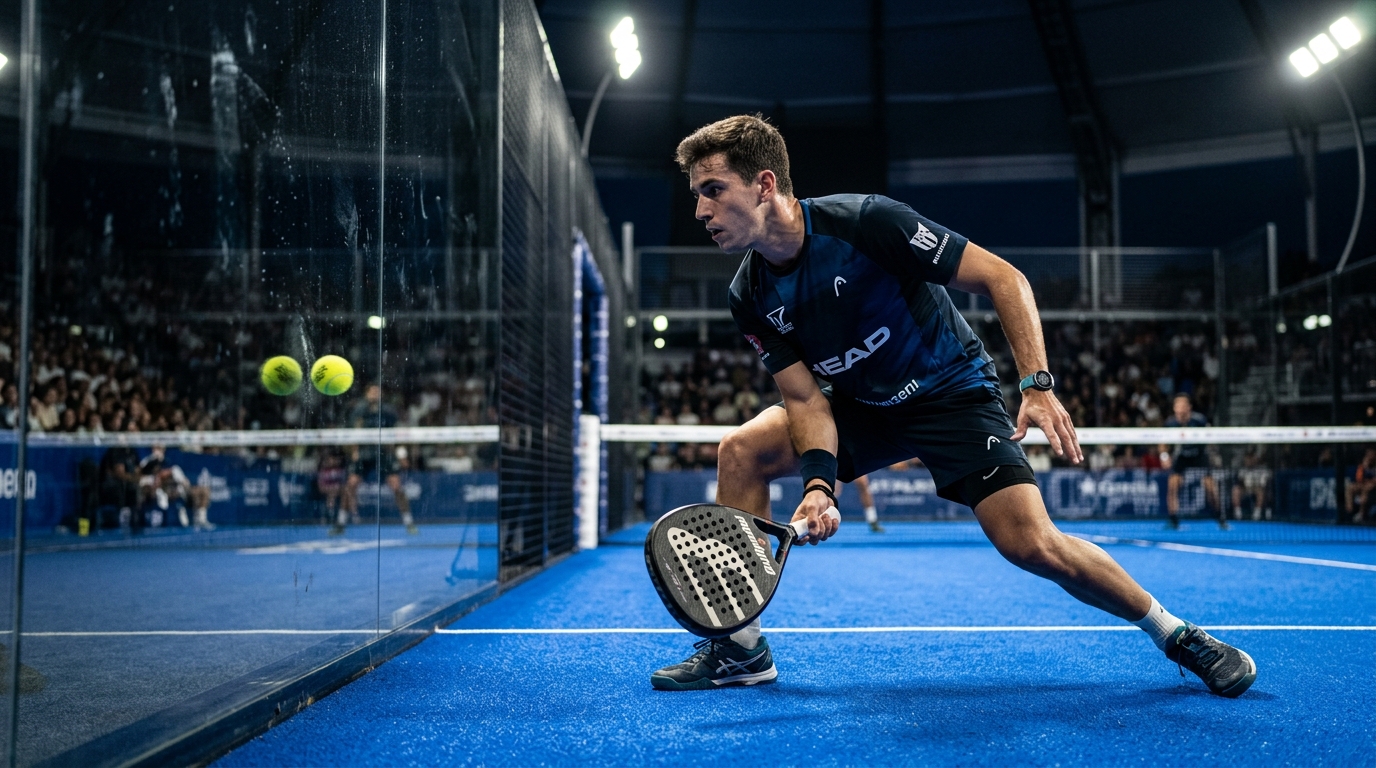
An aggressive downward attacking drive struck as the ball rebounds high and loose off your back glass.
Tactical Application: Transforms a defensive situation into an immediate offensive winner when an opponent’s lob rebounds high (chest to shoulder height) off your back wall.
Step-by-Step Execution
- Anticipate the high bounce and position yourself between the ball and the back glass.
- Let the ball strike the wall and reach the peak of its forward rebound.
- Transfer your body weight forward aggressively and drive downward through the ball with slice or heavy flat speed.
- Aim down the central seam between opposing partners or directly at the body of a net player.
Target Placement: The center court seam between opposing partners or low into the corners.
El Globo (The Tactical Lob)
A high-trajectory lob that arcs over the net players, forcing them to retreat to the baseline so your team can claim the net.
Tactical Application: The foundational tactical stroke in padel. Master players rely on consistent, high-arcing lobs to relieve baseline pressure and transition to the offensive net position.
Step-by-Step Execution
- Bend your knees deeply beneath the ball with an open, stable racket face.
- Use your legs and upward body extension rather than excessive wrist action to control trajectory and height.
- Aim for 6 to 8 meters of vertical clearance, targeting the back 2 meters of the opponent’s court.
- Advance forward to the net in unison with your partner the moment the lob clears the opposing volleyers.
Target Placement: The deep baseline zone within 1 meter of the opponent’s back glass.