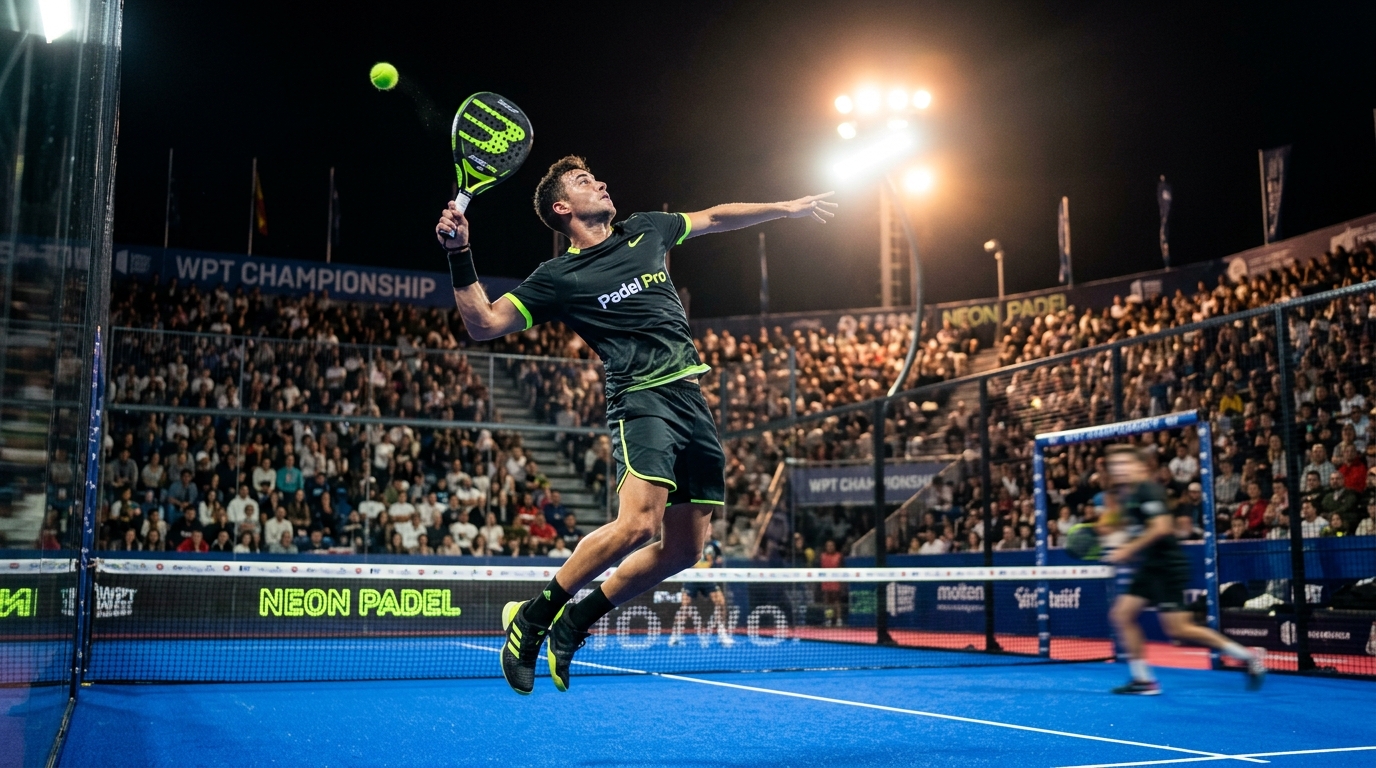
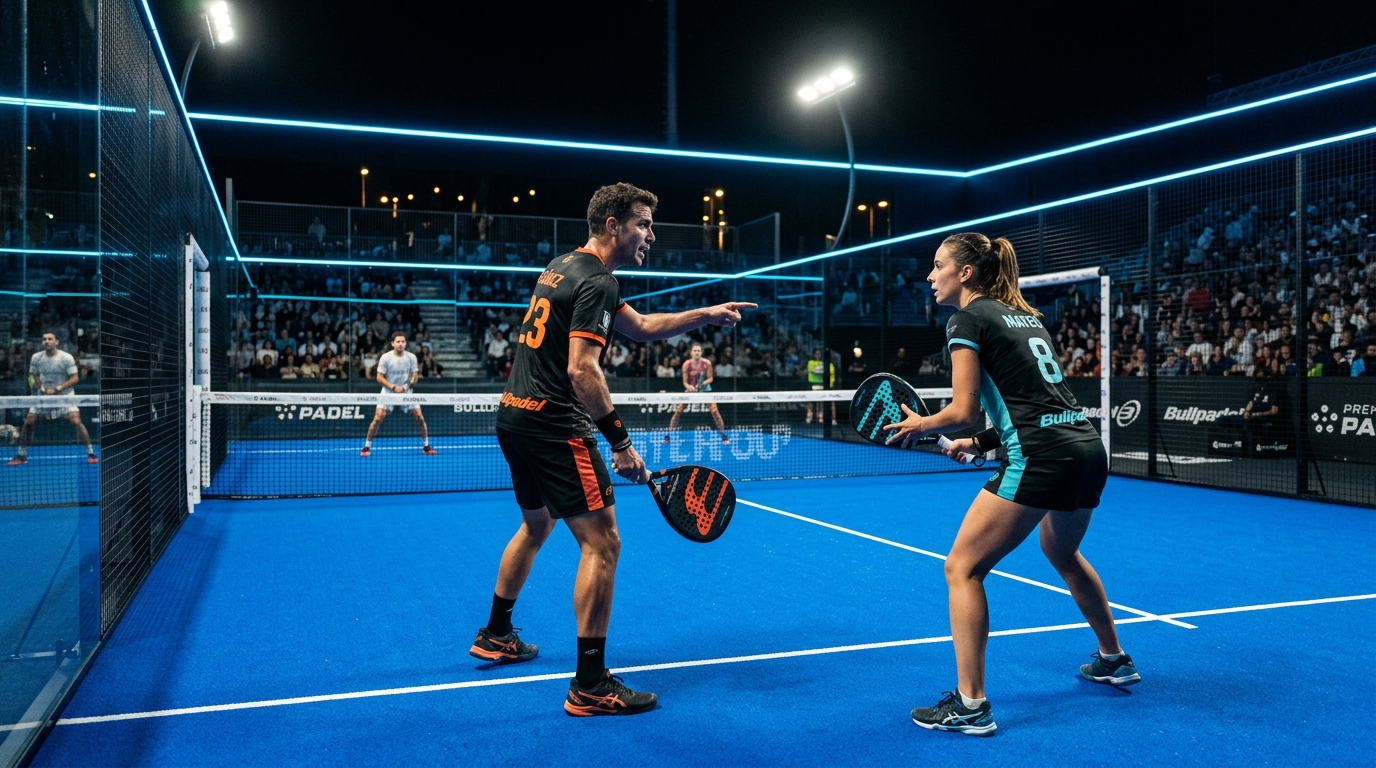
Mastering the Glass in Padel: Wall Physics, Rebound Angles, Corner Defense (Doble Pared) & The Bajada Counter-Attack
For newcomers, the tempered glass walls of a padel court feel like an unpredictable cage of chaos. For seasoned tournament players, the glass is an ally that buys time, neutralizes 120 km/h power smashes, and provides the launchpad for lethal counter-attacks. Learn how to conquer wall physics, decode corner rebounds, and turn pure defense into offensive dominance.
📑 Playbook Table of Contents
- The Psychology of Letting the Ball Pass You
- The Physics of Tempered Glass & Spin Friction
- The Simple Back Wall (Pared de Fondo): Mechanics & Timing
- The Side Wall & The Dreaded Metal Mesh (Malla)
- Double Glass Decoded: Abre vs. Cierra Corner Mastery
- The Pirouette: 360° Body Rotation Biomechanics
- The Counter-Attack: The High Bajada & “La Cuchilla”
- Five Solo & Partner Wall Drills to Build Muscle Memory
- Frequently Asked Wall Defense Questions
1. The Psychology of Letting the Ball Pass You
If you transitioned into padel from tennis, squash, or pickleball, you possess a conditioned neurological reflex that is actively destroying your padel game: the primal urge to strike the ball before it travels past your hips.
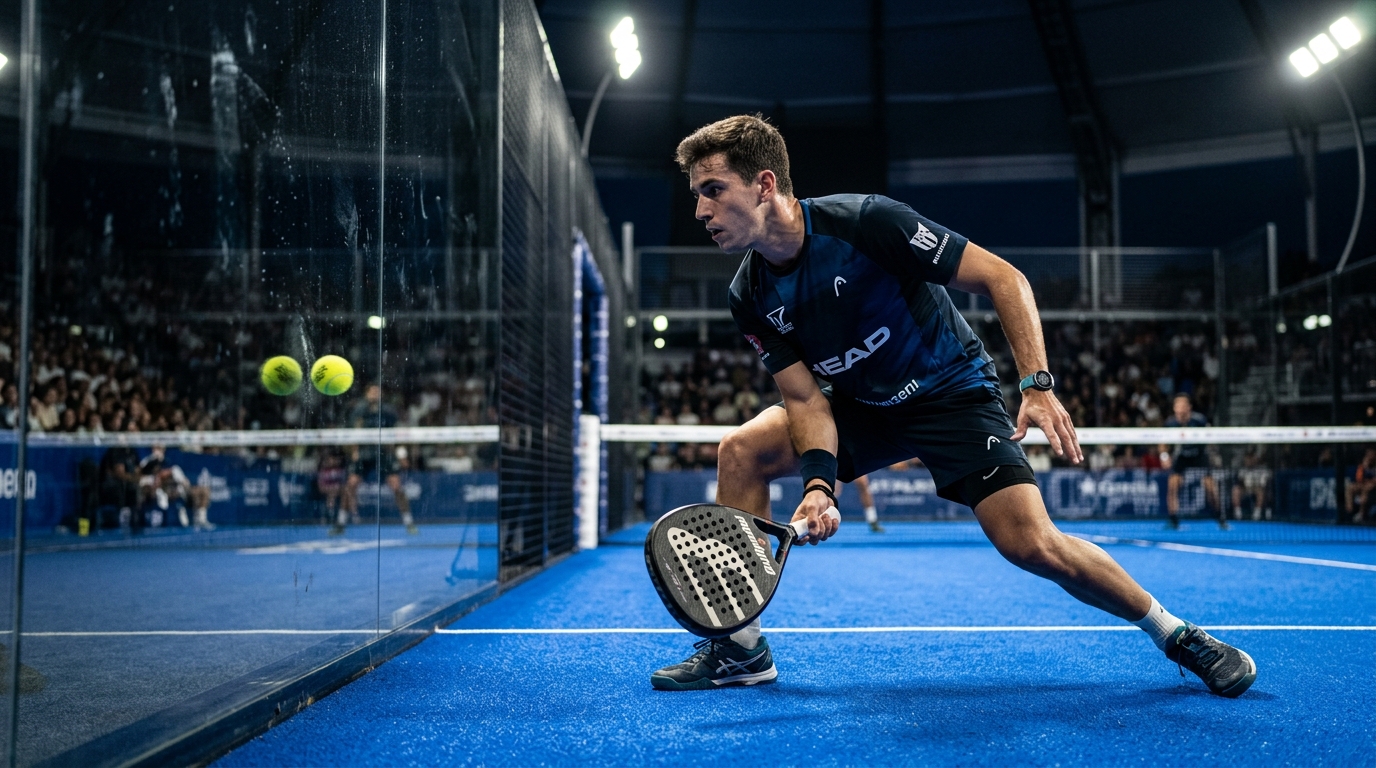
In tennis, the moment a ball gets behind your body, you are officially in panic mode. In pickleball, the ball dies behind you. But in padel, the ball passing your body is not a crisis — it is a gift of time. The moment you permit a deep ball to bounce on the turf, strike the 10mm or 12mm tempered safety glass, and rebound forward, two miraculous things occur:
1. Kinetic Deceleration
A heavy smash traveling at 90 km/h loses roughly 35% of its velocity upon the turf bounce and another 25% upon impacting the glass. By waiting for the rebound, you are no longer defending a missile; you are stroking a decelerated, comfortable ball.
2. Complete Spatial Control
As the ball rebounds off the wall back toward the net, it moves into your natural forward swing plane. You hit with your body weight transferring forward toward your target, rather than awkwardly lunging backward off your heels.
💡 The Golden Mantra for Glass Defense:
“Turn your shoulders early, accompany the ball to the glass, and strike it on the way out.” If your racket is not already pulled back into preparation before the ball hits the glass, you will be perpetually rushed.
2. The Physics of Tempered Glass & Spin Friction
A professional padel court utilizes 10mm or 12mm monolithic tempered glass modules compliant with EN 12150-1 safety regulations. Unlike concrete or drywall walls found in older fronton or squash courts, smooth tempered glass has a virtually frictionless surface (μ ≈ 0.15 - 0.20). However, because padel balls have rubber bladders pressurized to 1.75–2.0 bar and felt covers, their behavior off the glass is governed strictly by the spin applied by your opponent.
| Incoming Ball Spin | Impact Reaction on Glass | Defender Adjustment Required |
|---|---|---|
| Topspin Drive / Rulo | The forward rotation bites the vertical glass face, forcing the ball to kick sharply upward and accelerate forward into the court. | Do NOT bend low! Take two steps back toward the center of the court. The rebound will jump up to chest or head height, setting up an offensive Bajada. |
| Heavy Slice (Bandeja / Víbora) | The backspin catches the glass and is dragged downward. The ball dies, skids, and drops abruptly toward the turf with minimal forward rebound. | Emergency reaction! You must drop your hips into a deep squat, get your racket head beneath the ball, and scoop a defensive lob before the 2nd bounce. |
| Flat Hard Smash (Remate) | Direct elastic compression. The ball rebounds straight out along the complementary angle of incidence with high exit velocity. | Do not run away from the glass. Stay grounded and block the ball in front of your body with a compact, firm punch. |
The Angle Law: Angle of Incidence Equals Angle of Reflection
If an opponent strikes a crosscourt shot from their right corner toward your left back wall at a 40-degree angle, the ball will ricochet off the glass at the exact corresponding 40-degree angle. By tracking the opponent’s racket path, your brain can calculate the exit vector before the ball even touches the wall.
3. The Simple Back Wall (Pared de Fondo): Mechanics & Timing
The single back glass rebound (Salida de Pared) is your most frequent defensive encounter. When a deep ball crosses the service line and heads for the back wall without contacting the side glass, follow this step-by-step biomechanical sequence:
Shoulder Coil & Racket Takeback
The instant the ball clears the net and you recognize it is going deep, turn your shoulders 90 degrees sideways (closed or semi-open stance). Set your racket back at hip height. Never run backward with your chest facing the net.
The Separation Distance (1 Meter Rule)
Beginners make the fatal mistake of backing up until their shoulders touch the glass. When the ball rebounds, it hits their chest. You must halt your retreat approximately 1 to 1.2 meters away from the back glass. This creates the optimal strike corridor where the ball rebounds directly into your hitting zone.
Contact Point in Front of the Lead Hip
Wait for the ball to rebound off the glass, reach the peak of its bounce, and begin descending to waist height. Strike the ball 20–30 cm in front of your lead hip while transferring your body weight from the back foot to the front foot.
4. The Side Wall & The Dreaded Metal Mesh (Malla)
While the back wall provides predictable perpendicular rebounds, the side wall introduces violent lateral angles. Worse yet, the side of a padel court transitions from glass panes into rigid welded electro-welded wire mesh (la malla / the metal cage).
The Side Glass (Pared Lateral)
The ball strikes the side glass and kicks across the width of the court. To defend it, you must position your body between the side glass and the center of the court. Never get pinned with your back pressed against the side wall; give the ball 1 meter of breathing room to ricochet into your racket.
The Metal Mesh (La Malla) Chaos
The metal grid has irregularities, welded intersections, and flexible recoil. When a ball hits the mesh, it can kick straight up, shoot dead along the turf, or shoot directly backward at your ankles.
5. Double Glass Decoded: Abre vs. Cierra Corner Mastery
In the corners of the court, the side glass and back glass meet at a precise 90-degree angle. When a ball impacts both panes consecutively, it is known in Spanish as Doble Pared (Double Wall). This is where 90% of amateur players get mentally overwhelmed.
There are only two variations of double glass in the game of padel. Understanding which one is unfolding before the ball touches the first wall determines whether you win or lose the rally:
1. Doble Pared que Abre (“Opens Up”)
Sequence: The ball hits the SIDE WALL FIRST, then rebounds into the BACK WALL.
Rebound Vector: Because it hits the side wall first, the back wall naturally pushes the ball outward into the open court. The ball opens away from your body.
2. Doble Pared que Cierra (“Closes In”)
Sequence: The ball hits the BACK WALL FIRST, then rebounds into the SIDE WALL.
Rebound Vector: The ball ricochets off the side wall straight back toward your body and into the corner. It “closes” the space, pinning you against the glass.
6. The Pirouette: 360° Body Rotation Biomechanics
When facing a Doble Pared que Cierra, players who attempt to stay facing forward end up making awkward, contorted swings with their elbows jammed into their torsos. To unlock high-level corner defense, you must master the Pirouette (Giro de Pared).
How to Execute the Flawless 3-Phase Corner Turn:
- Read the Angle of Entrance: As soon as the ball passes you headed deep into the corner towards the back glass, recognize that it will hit the side glass next.
- Pivot on Your Outside Foot: Turn your back to the net and rotate your shoulders and hips in the same direction the ball is spinning. You literally turn with the ball, keeping your eyes tracked on its trajectory across the corner vertex.
- Unwind and Strike in Open Space: As the ball exits off the second wall into the court, your body completes its 360-degree rotation. You emerge from the turn facing the net with your racket ready to strike the ball cleanly out in front!
7. The Counter-Attack: The High Bajada & “La Cuchilla”
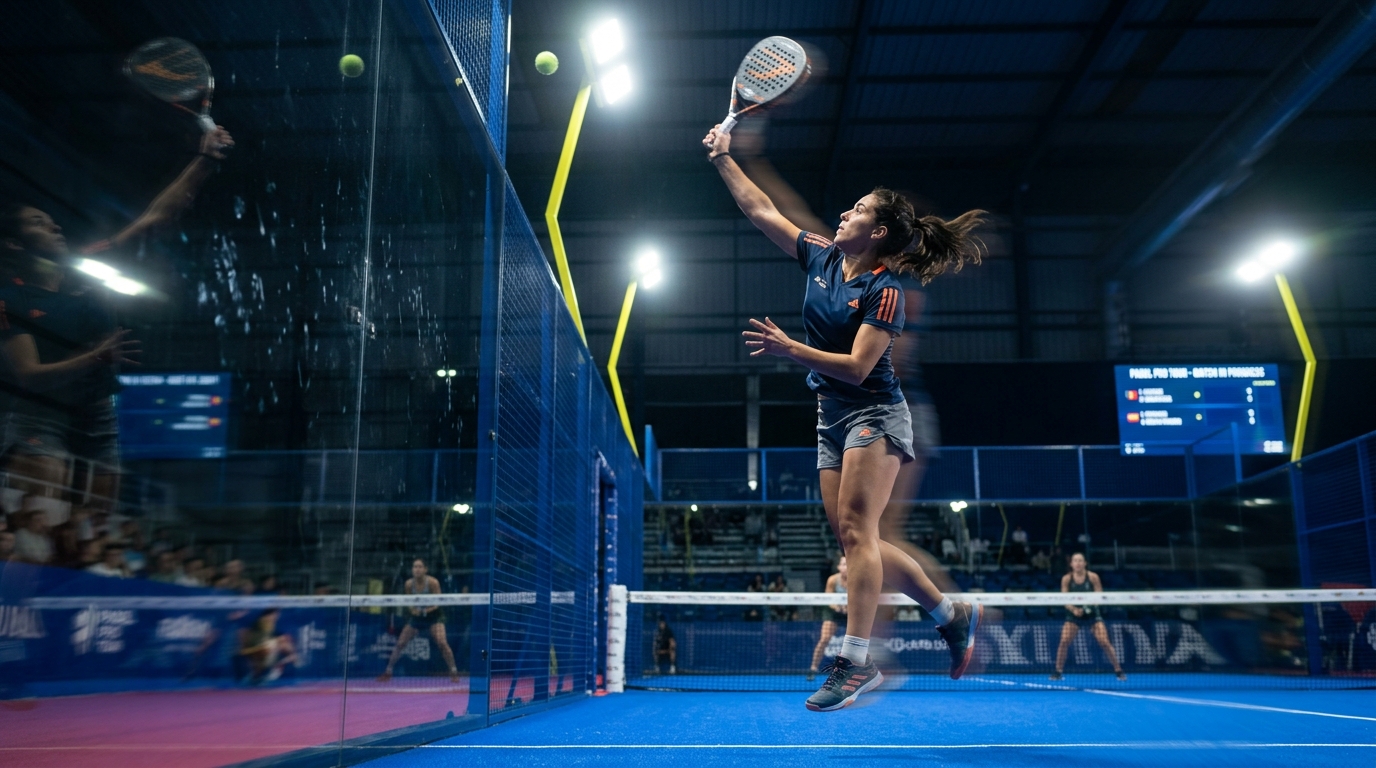
The back glass is not merely a shield; it is a catapult. When opponents hit an imperfect, floating lob that bounces deep and rockets high up the back wall (reaching above chest height), defending with a weak lob is a criminal waste of court advantage. This is where you deploy the Bajada de Pared (The Wall Descent).
The Classic Slice Bajada
You position yourself directly behind the high rebound. As the ball drops to head level, execute a high-to-low slice stroke across the back of the ball. The ball flies low over the net strap with heavy backspin, dropping sharply into the feet of the incoming net players.
“La Cuchilla” (The Blade)
Made famous by pro stars like Paquito Navarro, La Cuchilla is an aggressive overhead slice struck from high off the back glass with severe lateral cut. The ball dies upon contacting the opponents’ back glass, staying virtually glued to the turf.
Targeting Matrix for the Bajada:
- The Center Channel: Hit hard down the middle between both opponents to cause hesitation, racket clashing, or weak upward pop-ups.
- The Opponent’s Dominant Feet: Drive the ball with slice directly at the feet of the net player who is rushing forward, forcing an impossible half-volley.
- The Side Cage Angle: Hit an angle into the side wire mesh to produce unpredictable rebounds and instant unforced errors.
8. Five Solo & Partner Wall Drills to Build Muscle Memory
The 100-Rebound Glass Wall Rally
Stand 2 meters from the back glass alone. Hit the ball forward against the wall, let it bounce off the turf once, and return it with controlled waist-height slice. Repeat 50 forehands and 50 backhands without stopping.
The Corner Pirouette Machine
Your partner stands at the net feeding crosscourt slice into the corner vertex. You must call aloud “ABRE” or “CIERRA” before the ball hits the first pane, execute the rotational turn, and return a deep lob.
Bajada vs. Volley Duel
Coach feeds deep, bouncing lobs off the back glass. You practice leaping into attacking Bajadas down the center, while your partner at the opposite net tries to block your downward drives.
Mesh Interception Agility
Partner hits low slice shots aimed at the side metal mesh. Your objective is to practice fast forward split-stepping to volley or half-volley the ball before it strikes the erratic cage wire.
9. Frequently Asked Wall Defense Questions
What is the difference between “Doble Pared que Abre” and “Doble Pared que Cierra”?
In a “Doble Pared que Abre” (opens up), the ball hits the side wall first and then the back glass, causing the rebound to travel naturally into open court without jamming you. In a “Doble Pared que Cierra” (closes in), the ball hits the back wall first and then bounces into the side wall, ricocheting back across your body. This requires a 360-degree rotational turn (pirouette) to avoid getting trapped against the glass.
How does ball spin affect the rebound off the glass?
Topspin grips the vertical glass and kicks upward with extra speed, offering the defender time to execute an aggressive Bajada. Heavy slice or backspin causes the ball to slide downward toward the turf immediately upon contact, requiring defenders to get down low and scoop a defensive lob before the second bounce.
What is the correct distance to stand from the back glass when defending?
When defending at the baseline, stand approximately 1.5 to 2 meters in front of the back glass and about 1 meter behind the service line. This starting position gives you the ideal vantage point to step forward for short balls or execute crossover steps backward to let deep balls rebound off the wall.
What is a Bajada de Pared and when should you use it?
A Bajada de Pared is an aggressive counter-attacking stroke executed when an opponent hits an imperfect lob that rebounds high off your back glass (above chest or head height). Instead of hitting a soft defensive lob, the player leaps up behind the rebound and drives an overhead slice or flat projectile downward into the opponent’s feet or down the middle channel.