Tennis to Padel Transition Playbook: 7 Fatal Tennis Habits You Must Unlearn to Win in the Cage
You have spent a decade honing a punishing topspin forehand, explosive overheads, and lightning baseline recovery. Then you step onto a 10×20m glass padel court and get methodically dismantled by two craft veteran players who barely break into a jog. Here is why your tennis muscle memory is currently your greatest competitive liability—and the exact technical blueprint to transform it into your ultimate cage superpower.
📑 Playbook Table of Contents
The Psychological Shock: Why 4.5+ Tennis Players Fail in Their First 30 Days
There is an almost universal rite of passage in padel: the arrival of the experienced tennis player. They show up to their first match with an aggressive posture, impeccable athletic conditioning, and a lethal 130 km/h baseline forehand honed over hundreds of hours on clay or hard courts. They strike the ball with pristine technique, expecting immediate tournament dominance.
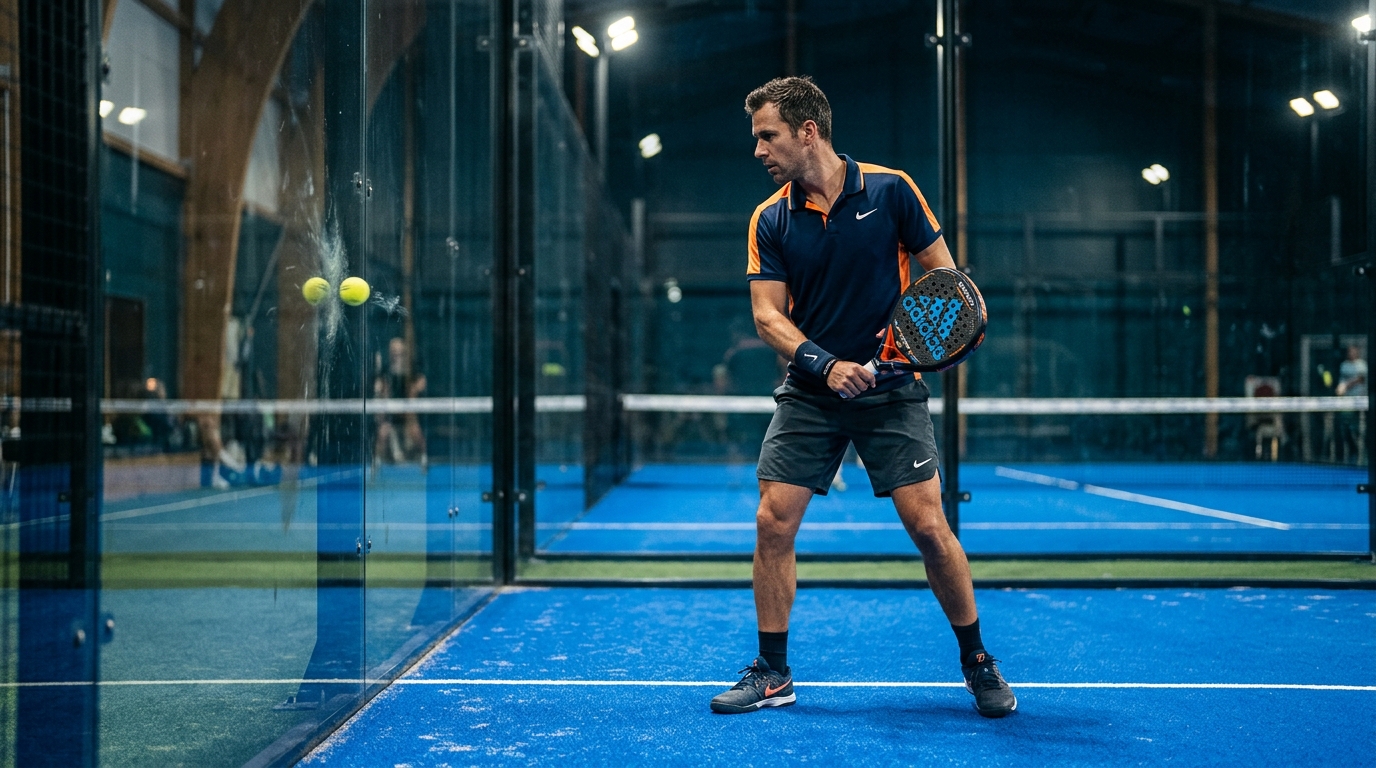
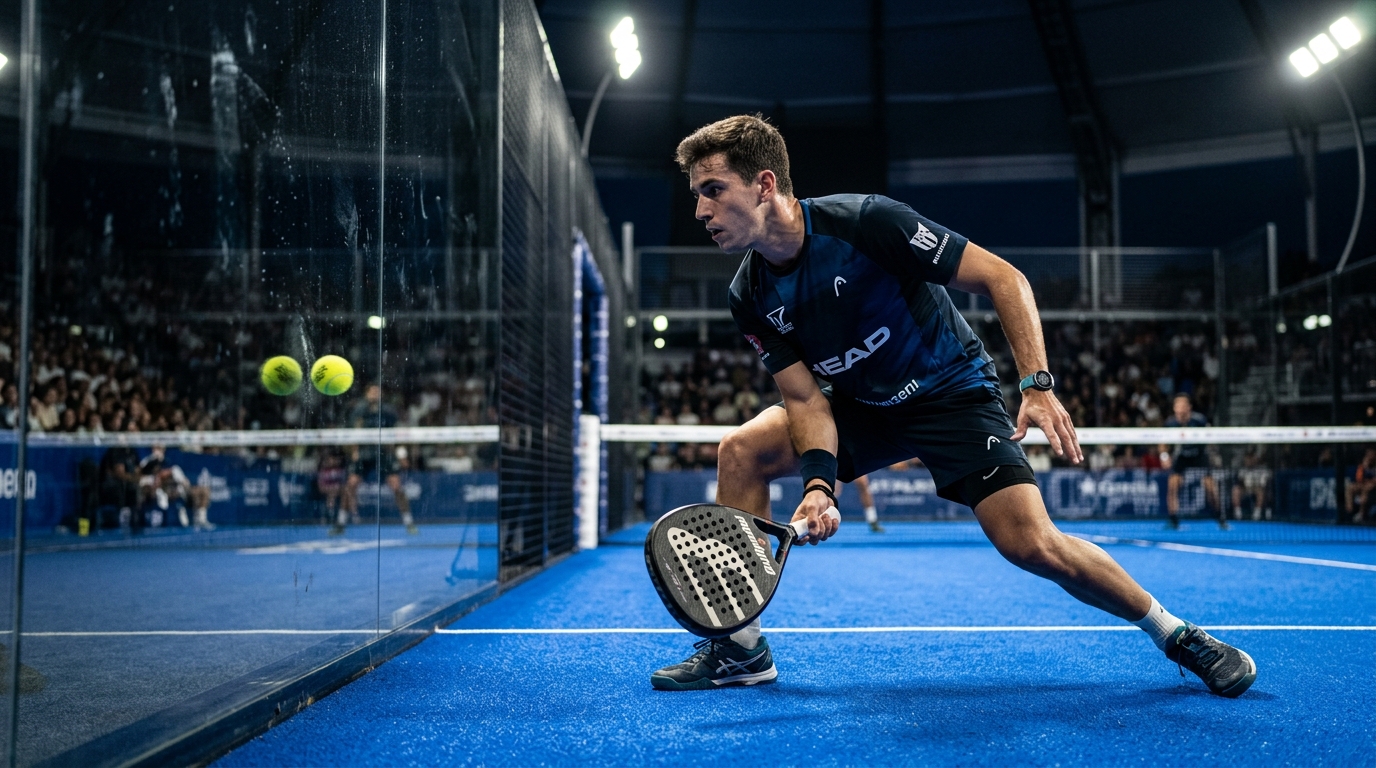
Within twenty minutes, they are completely disoriented. They blast a blistering drive down the line that would have won 100 out of 100 points on a tennis court. In padel, however, the ball collides with the 12mm tempered back glass, rebounds softly into the center of the court, and a smiling 55-year-old padel veteran steps forward and taps a gentle drop shot into the fence for a winner. The tennis player stands bewildered, wondering how their most formidable offensive weapon was effortlessly converted into their own demise.
The root cause of this frustration is neurological: tennis rewards spatial expansion and linear velocity, while padel rewards spatial compression, geometry, and rotational deceleration. Tennis is played on an expansive 23.77m × 8.23m open canvas where hitting the ball past your opponent ends the point. Padel is played inside a 20m × 10m enclosed cage where the back wall serves as the ultimate defensive equalizer. Hitting harder merely gives the wall more kinetic energy to reflect straight back into your face.
To conquer padel, you do not need to discard your tennis gifts. Your hand-eye coordination, reaction speed, overhead timing, and volley reflexes are extraordinary assets. However, you must systematically unlearn seven hardwired mechanical instincts that actively sabotage you inside the glass cage.
Habit #1: The Massive Looping Takeaway (Getting Jammed on Turf)
In modern tennis, groundstrokes are generated through extensive kinetic chain pre-stretching. You initiate a large unit turn, drop the racket head below and behind your back hip, and unleash a massive circular loop to whip the stringbed through the contact zone. This looping swing requires roughly 1.5 to 2 meters of clear clearance behind your torso.
In padel, that expansive backswing is a fatal flaw. First, the distance between you and your opponents at the net is only 8 to 11 meters—cutting your reaction time in half. Second, when defending near the back wall, taking a big looping backswing causes your solid carbon paddle to violently strike the tempered glass or wire mesh before you can even initiate your forward stroke. Third, because the padel ball bounces lower on artificial turf and sand, a big loop inevitably produces contact well behind your hips, leading to mistimed frames, shanked balls, and erratic trajectories.
The Padel Correction: The "Pre-Set Shelf" Technique
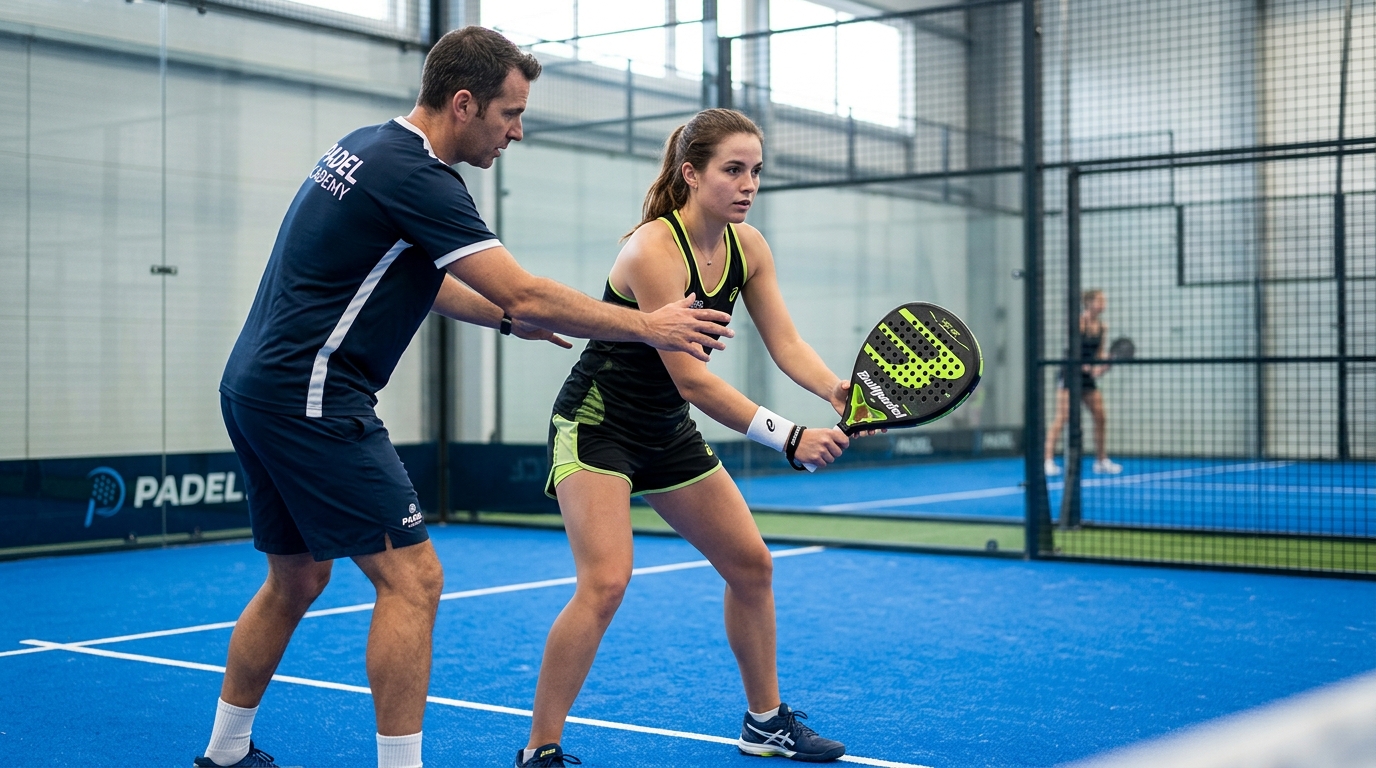
Instead of coiling with a circular takeaway, imagine setting your paddle onto a narrow shelf directly behind your dominant hip the split second your opponent strikes the ball. The tip of your paddle should never travel further back than the plane of your rear shoulder:
- Zero Loop: Draw the paddle straight back in a short, linear vector. If you were standing 4 inches in front of a concrete wall, your paddle should never touch the wall during preparation.
- Contact 6 Inches in Front: Strike the ball 15 to 20 cm in front of your lead knee. Because padel rackets have solid foam cores with no string trampoline effect, contact out in front is the only way to direct the ball with precision.
- Short Push Follow-Through: Replace the tennis windshield-wiper wrap around the neck with a compact chest-high extension that finishes pointing toward your intended target.
Habit #2: Heavy Topspin & The Glass Penalty
If you ask a competitive tennis player what their favorite shot is, they will describe a dipping topspin cross-court pass that drops violently at the opponent's feet. In tennis, topspin is king: the Magnus effect pulls the ball down into the court, allowing you to hit with enormous speed while maintaining net clearance.
In padel, hitting topspin is an invitation to disaster. Here is the exact physics of what happens when a topspin shot travels past the baseline in padel:
- The ball hits the turf with forward rotational velocity.
- Instead of sliding, the ball grips the sand and accelerates forward into the 12mm glass wall.
- When the forward-spinning rubber core strikes the slick glass, friction grips the surface and converts forward spin into an explosive upward trajectory.
- The ball rebounds off the wall and floats lazily at chest or head height, hanging suspended directly in front of the defending opponent.
Any seasoned padel defender will devour this hanging gift with a Bajada de Pared—a ferocious overhead attack from the back glass that puts you instantly on the defensive or wins the point outright.
The Padel Correction: Master the "Biting" Backspin Slice
To neutralize the glass, you must replace topspin with cutting backspin (slice). When a sliced ball strikes the back glass, the reverse rotation forces the ball to bite against the glass and skid violently downward toward the turf. Instead of floating up to chest height, the ball rebounds at ankle height and dies immediately, forcing the defender to dig it out off the floor with zero offensive leverage.
Adopt a high-to-low swing path on your groundstrokes, contacting the equator of the ball and carving beneath it with a firm Continental wrist. The flatter and lower the trajectory off the back glass, the more helpless your opponents will be.
Habit #3: Baseline Retreat & Surrendering the Net Command Center
In modern tennis, 85% of points are contested from the baseline. Tennis players feel completely at home 2 to 3 meters behind the baseline, trading deep groundstrokes and waiting for a short ball to pounce on. Venturing to the net is treated as an opportunistic excursion.
In padel, the baseline is an emergency defensive triage bunker; the net is where matches are won and lost. More than 80% of winning points in professional and competitive padel are finished at the net. If you stay on the baseline in padel, you are conceding court territory, giving your opponents time to maneuver, and allowing them to angle volleys into the side wire fence (the malla) where the bounce becomes completely unpredictable.
The Padel Correction: The Relentless Net Recovery Instinct
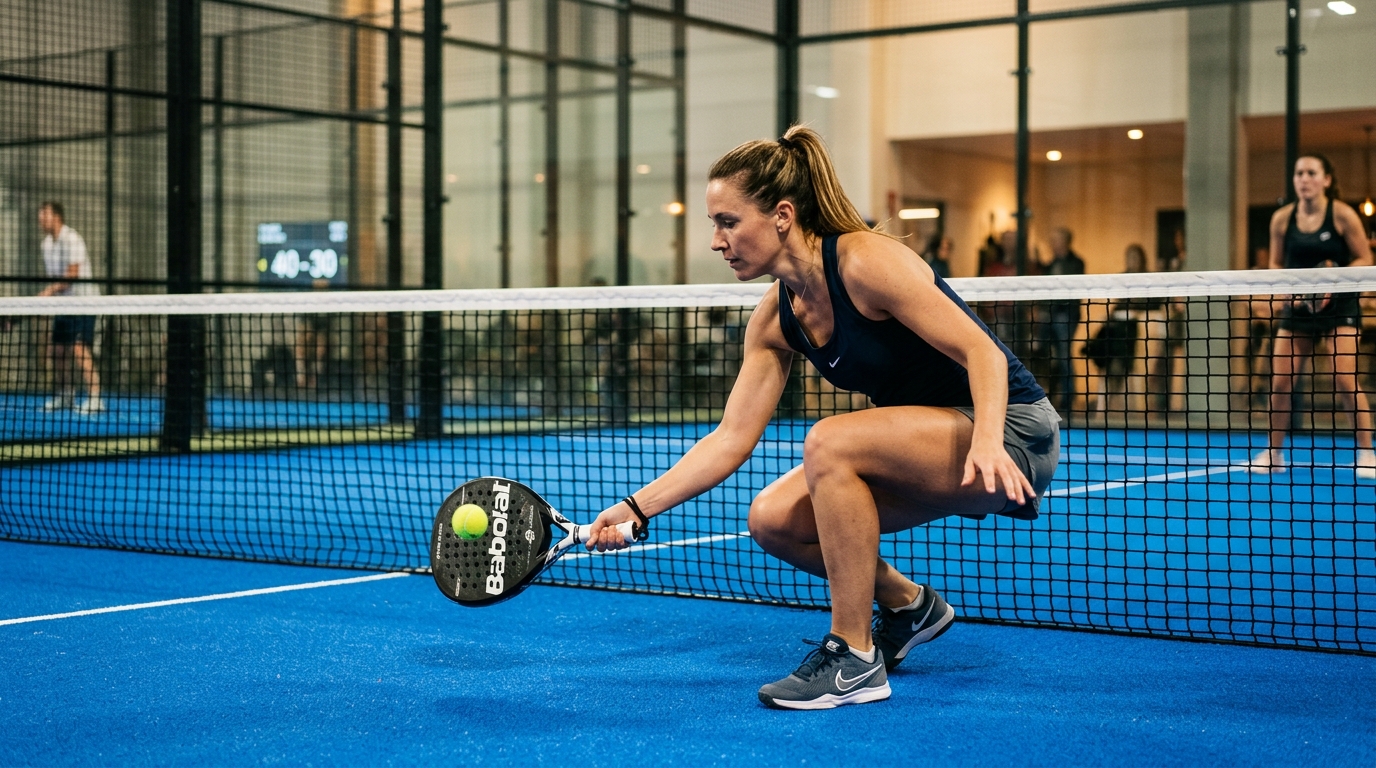
Your entire tactical orientation must invert. In tennis, you play from the back and come forward only when you have an opening. In padel, you hold the net at all costs. When you are forced to retreat to the back glass to retrieve a defensive lob, your very next shot—whether a high lob or a dipping Chiquita—has one primary strategic purpose: to buy you and your partner enough transit time to sprint back to the net position 2 meters from the center band.
Never linger in "no man's land" between the service line and the net. In padel, you are either locked into defensive positions behind the service line (near the back glass), or you are commanding the net. Standing in the middle makes you an easy target for fast balls into your shoelaces.
Habit #4: The Flat Overhead Smash Delusion
When a tennis player sees an overhead lob floating in the air, their eyes light up. They jump into the air, pronate their wrist aggressively, and smash the ball with maximum downward velocity straight into the opponent's court. In tennis, a 160 km/h flat smash bouncing into the open court is an unreturnable winner.
In padel, that exact flat smash is suicide. Unless you are standing within 1.5 meters of the net and can smash the ball hard enough to bounce over the 4-meter back fence (a Por Cuatro) or back over the net onto your own side, a flat smash simply bounces off the back glass like a rubber bullet. The ball rebounds with immense speed straight into the opposing players, who are already waiting at the net to slap an effortless put-away into the open court.
The Padel Correction: Replace Smashes with the Bandeja & Víbora
You must reprogram your overhead instinct. 90% of overhead balls in padel should not be hit as winners; they should be hit as repositioning strokes designed to maintain net control:
- The Bandeja (Tray Shot): Hit with an open racket face at 2 o'clock, cutting underneath the ball with downward slice. It flies flat, bounces low, dies off the back glass, and allows you to glide back to the net without sprinting.
- The Víbora (Viper): Hit around the side of the ball with heavy lateral sidespin. When it collides with the back and side corners, it hooks unpredictably along the turf.
- Save the Power Smash: Only hit an aggressive kick smash (like the Por Tres) when you are properly balanced inside the front half of the court and can generate extreme topspin to bounce the ball out of the 3-meter side wall.
Habit #5: Turning Your Back to the Wall & The "Let it Pass" Phobia
In tennis, the baseline is the end of the universe. If a ball gets past your feet, the point is over. Consequently, tennis players possess a deep, subconscious panic whenever a ball travels deep into the court. They will contort their bodies, reach desperately behind their hips, and try to half-volley or scoop balls that are flying deep toward the back fence.
In padel, the back glass is your best friend, not your enemy. When an opponent hits a deep ball, attempting to play it on the half-volley before it hits the glass is extraordinarily difficult and yields a weak floating ball. If you simply let the ball pass your body, it will strike the glass, lose 40% of its velocity, and bounce gently toward the center of the court at waist height—presenting you with an effortless attacking drive.
The Padel Correction: The "Escort the Ball" Footwork Drill
The hardest mental barrier for tennis converts is overcoming the instinct to strike the ball on the rise. Practice this footwork sequence:
- Read the Depth: If the incoming ball will bounce behind the service line, immediately decide: "I will let the glass play this ball."
- Run with the Ball: Do not stand still waiting for the rebound. Turn your hips sideways and jog alongside the ball toward the back wall. You must reach the back wall before the ball rebounds.
- Wait for the Exit: Watch the ball hit the glass. As it bounces out into the court, follow it forward with your weight transfer and strike it cleanly at waist height out in front of your front hip.
Habit #6: Grip Orthodoxy (Semi-Western vs. The Continental Law)
Almost every modern tennis player uses a Semi-Western or Eastern forehand grip, rotating their hand beneath the bevels of the racket to facilitate high-speed brushing up the back of the ball. Some switch between three distinct grips during a single rally: Semi-Western for forehands, Eastern or Continental for volleys, and Eastern backhand for one-handers or two-handed configurations.
In padel, changing grips during rapid exchanges is a guaranteed path to failure. The exchanges at the net happen in milliseconds, with balls whistling past your body at point-blank range. If you are holding a Semi-Western grip and someone rifles a ball at your backhand hip or you need to dig a ball off the back glass at ground level, you cannot open the racket face quickly enough. You will dump the ball into the net every time.
The Padel Correction: The Pure Continental "Hammer" Grip
In padel, you must play 95% of your shots with the Continental grip (Bevel #2 on an octagonal handle). Place the base knuckle of your index finger on the top-right bevel (for right-handers). Hold the paddle exactly as if you were driving a nail into a wall with a hammer.
The Continental grip provides unmatched mechanical advantages in padel:
- Zero grip changes required between forehand volleys, backhand reflex blocks, and defensive wall returns.
- Naturally opens the paddle face to carve underneath low balls and generate defensive backspin slice.
- Allows maximum wrist flexibility for pronating and carving overhead Bandejas and Víboras.
Habit #7: Solo Tennis Heroics vs. The 3-Meter Elastic Cord
Tennis is deeply individualistic. Even in doubles tennis, players frequently operate with one player guarding the net and one player grinding from the baseline ("one-up, one-back" formation). Players roam their respective zones independently, attempting to hit spectacular passing shots or cross-court angles.
In padel, playing "one-up, one-back" is an automatic surrender. It tears open a massive diagonal corridor straight down the middle of the court that experienced opponents will exploit instantly. Padel partners must operate as a synchronized, cohesive unit—as if tied together by a 3-meter invisible bungee cord.
The Padel Law of Synchronized Movement:
- Synchronized Net Attacks: When your partner moves forward to seize the net, you must advance in lockstep. You never leave your partner stranded alone at the net.
- Synchronized Lob Retreats: When your opponents lob over your partner's head and force them to retreat to the back glass, you must retreat to the baseline with them to maintain a solid defensive shield.
- The Middle Rule: In padel, 70% of balls hit down the middle should be taken by the player positioned on the left side of the court (if right-handed), because their forehand naturally commands the center channel. Clear communication (shouting "Mía!" or "Yours!") is mandatory on every single shot.
Technical Shot Translation: Tennis to Padel Equivalents
To help your muscle memory translate quickly, use this direct mental bridge connecting your existing tennis mechanics to their authentic padel counterparts:
Tennis Drive → Padel Chiquita
Instead of blasting a flat passing shot through the opponent, feather a soft, dipping ball directly at the feet of the incoming net player. This forces them to volley up from below the net cord, setting up an easy smash for your team.
Tennis Slice → Padel Bajada de Pared
Your sharp tennis slice backhand mechanics translate directly into the Bajada. When a ball bounces high off your back glass, step forward, set your paddle high at shoulder height, and slice downward into the opponent's feet with venomous backspin.
Tennis Overhead → Padel Bandeja
Instead of jumping up and snapping your wrist downward, keep your feet on the turf, rotate sideways, raise your paddle like a waiter carrying a tray at eye level, and push a flat slice ball deep into the opponent's back corners.
Tennis vs. Padel: Master Adjustment Cheat-Sheet
| Biomechanic / Tactic | Tennis Instinct (Unlearn) | Padel Mastery (Adopt) |
|---|---|---|
| Backswing Radius | Large circular loop extending behind hips | Compact 6-inch linear takeaway at waist height |
| Grip Selection | Semi-Western / Western with multiple changes | Strict Continental hammer grip for 95% of strokes |
| Groundstroke Spin | Aggressive vertical topspin (Magnus dip) | Biting backspin slice to keep ball dead off the glass |
| Deep Lob Defense | Backpedal, jump, and hit on the half-volley | Turn hips, run past ball, let glass decelerate it |
| Primary Overhead | Flat 150 km/h wrist-snap smash for winners | Controlled Bandeja slice to retain net positioning |
| Court Positioning | Grinding behind baseline in open court space | Commanding net (2m from cord) or bunker defense |
| Partner Chemistry | One-up, one-back independent roaming | 3-meter elastic string synchronized team movement |
The 90-Day Transition Roadmap & Daily Training Drills
Do not jump straight into competitive tournament matches trying to play your old tennis game. Follow this structured 3-phase curriculum designed specifically for tennis converts:
Grip Lock & Wall Trust
Tape your wrist into Continental grip. Do not play competitive points yet. Spend 30 minutes solo against the back glass: let balls bounce into the wall, follow the exit trajectory, and hit gentle waist-high push returns.
Bandeja & The Chiquita Touch
Ban the flat smash from your repertoire entirely. Practice 100 Bandejas per session until you can land the ball within 1 meter of the opposing back wall with zero bounce height. Master the soft Chiquita into the feet.
Cage Warfare & Por Tres
Now combine your tennis hand-eye coordination with authentic padel tactical genius: double glass corner defense, reading off-the-wire rebounds, synchronized partner cord transitions, and the Por Tres kick smash.
Frequently Asked Questions for Tennis Converts
Level Up Your Padel IQ: Next Masterclasses
 Technical Masterclass
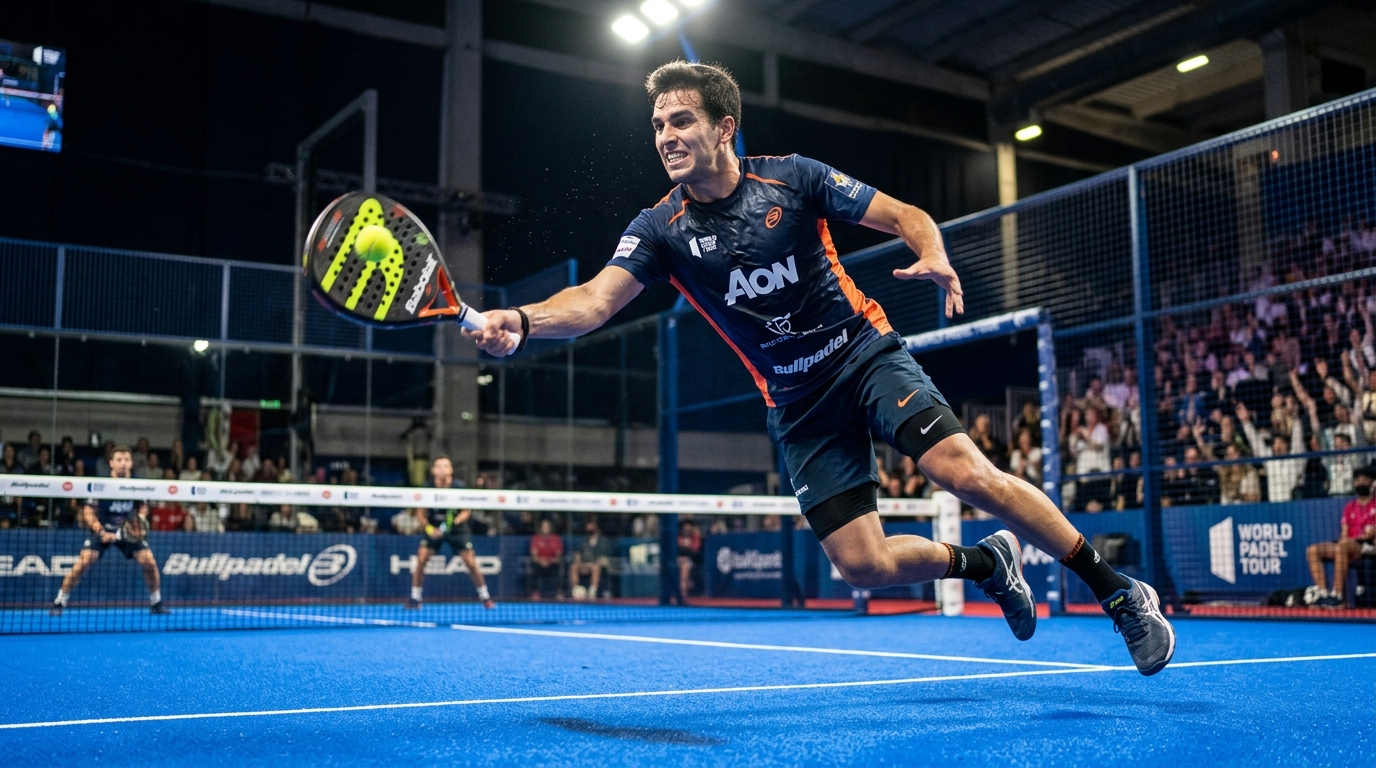
The Padel Overhead Masterclass: Bandeja vs. Víbora vs. Smash
Master contact points, court targeting, and decision-making for overhead control and power.
 Defensive Strategy
Mastering Padel Glass Wall Defense: Geometry & Footwork
Overcome wall panic, read double glass rebounds, and transform baseline defense into counter-attacks.