The Padel Overhead Masterclass: Bandeja vs. Víbora vs. Rulo vs. Smash (Por 3 & Por 4)
In tennis, an overhead is a brutal full-power execution stroke. In padel, an overhead is a game of chess played at 130 km/h. Unleash the exact biomechanics, contact angles, and split-second tactical decisions that separate the defensive Bandeja, the venomous Víbora, the surgical Rulo, and the crowd-pleasing Por Tres kick smash.
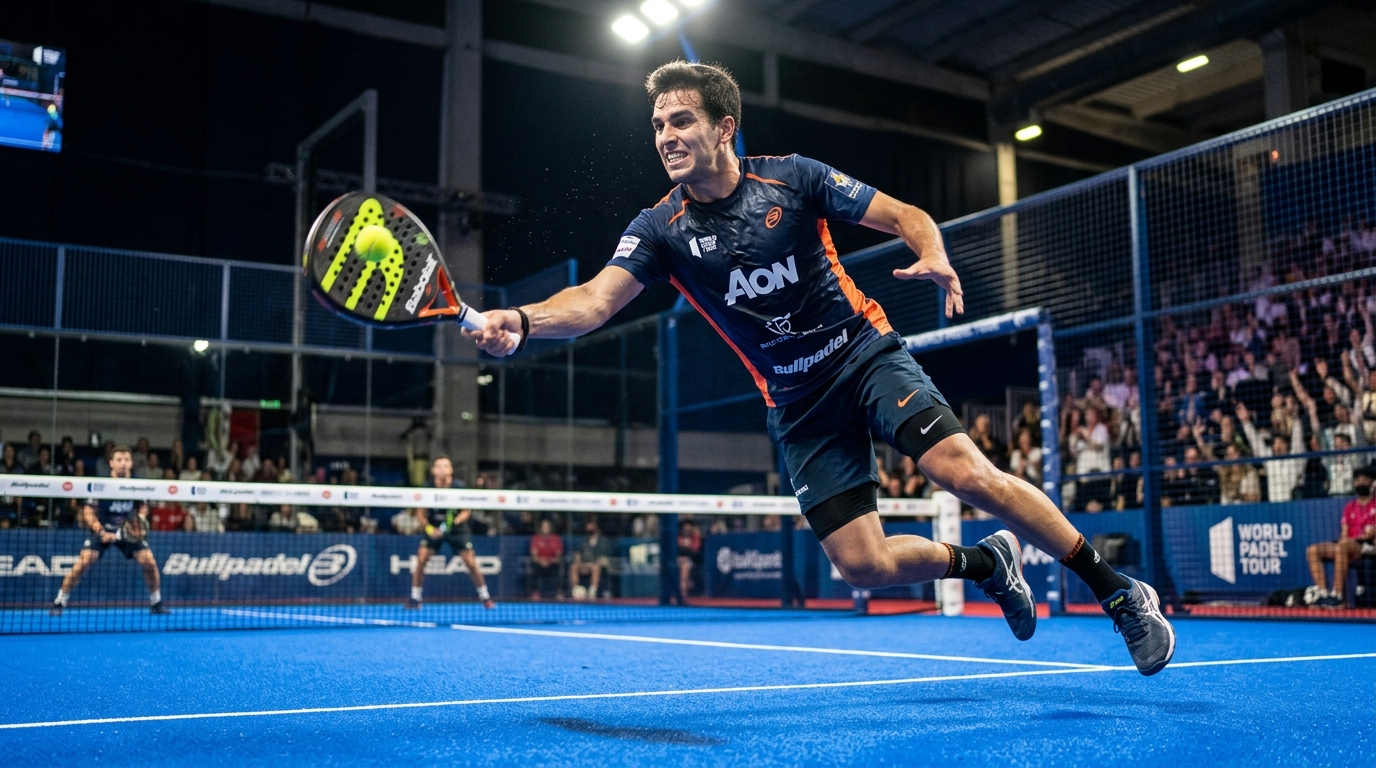
📑 Playbook Table of Contents
- The Padel Overhead Paradox: Why Tennis Power Fails
- The Bandeja: The Net Guardian and Horizontal Slice
- The Víbora: The Venomous Sidewinder and Wall Physics
- Side-by-Side Biomechanical Comparison Matrix
- The Rulo a la Verja: Curved Fence Assassin
- The Power Finishers: Remate Por 3, Por 4 & Bring-Back
- The 0.3-Second Overhead Decision Flowchart
- 7 Mechanical Sins in Padel Overheads
- Championship Drills: Solo Wall & Basket Progressions
- Frequently Asked Coaching Clinic Questions
1. The Padel Overhead Paradox: Why Tennis Power Fails in the Cage
There is an unforgettable moment of existential dread experienced by every high-level tennis player who enters a competitive padel tournament. An opponent retreats behind their baseline and sends up a floating, tempting defensive lob. The tennis player’s nervous system lights up like a pinball machine. They backpedal, unleash a violent 140 km/h pronated flat overhead, and strike the ball with pristine athletic ferocity.
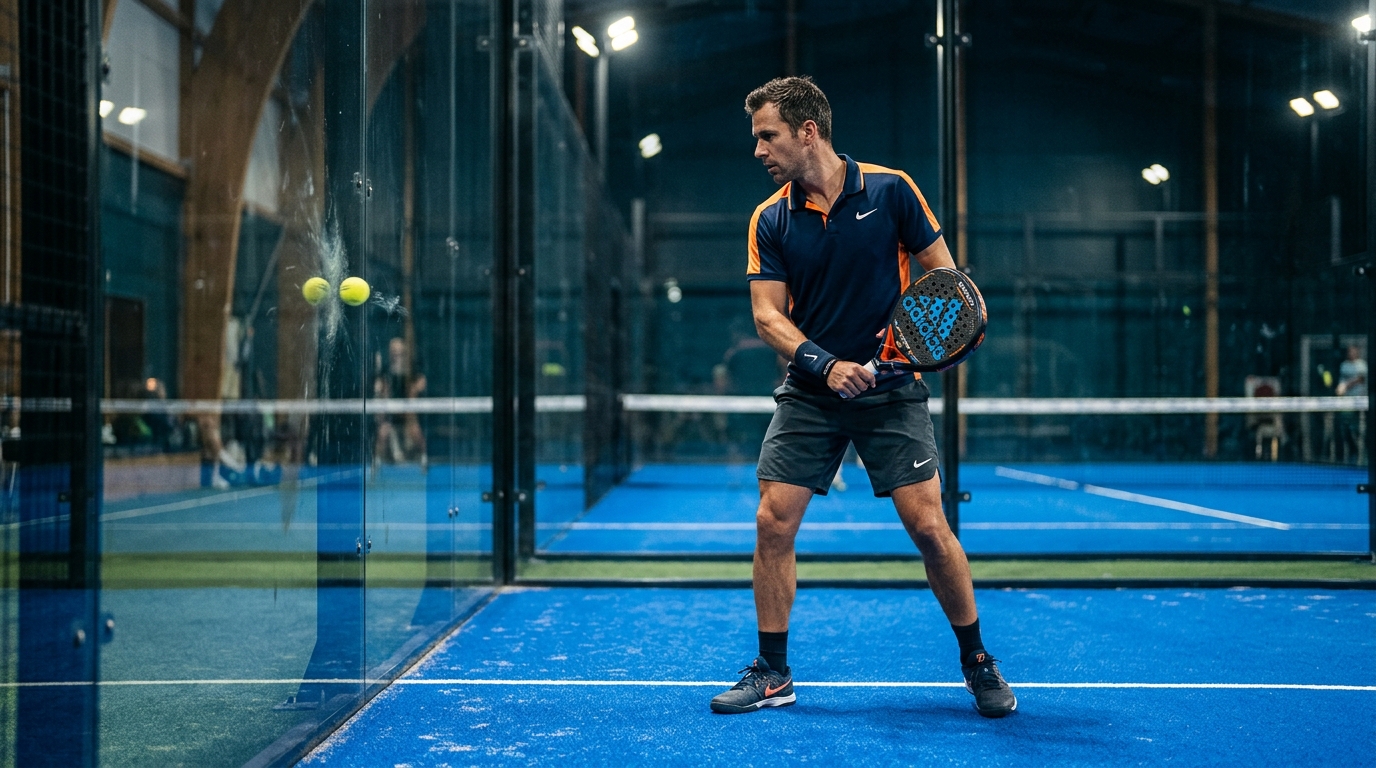
On a tennis court, the rally is over; spectators applaud, and the point is won. In a padel court, however, that missile bounces once on the artificial turf, explodes into the back tempered glass wall, and ricochets right back across the net at 80 km/h directly into the chest of the defending team. The defenders do not even need to move their sneakers. They casually extend their paddles, block the ball into an open corner, and win the point while chuckling.
This is the Padel Overhead Paradox: in padel, raw velocity without the correct rotational spin is not an offensive weapon; it is an assist for your opponents. The glass enclosure acts as an equalizer that absorbs linear speed and rewards players who understand rebound angles, spin friction, and court geometry.
To climb the ranks from a frustrated intermediate to an open-division tournament threat, you must dismantle your single-minded smash mentality and replace it with a toolbox of specialized overhead weapons: the Bandeja, the Víbora, the Rulo, and the surgical Por Tres kick smash.
2. The Bandeja: The Net Guardian and Horizontal Slice
The word Bandeja translates directly from Spanish to “tray” or “platter.” It was invented in Argentina and Spain out of absolute tactical necessity. When you and your partner hold the net (the undisputed attacking position in padel), your opponents have only one consistent tactical answer to dislodge you: the high defensive lob.
If you let their lob bounce on your turf, you are forced to retreat to the baseline, surrendering the net. If you try to jump and smash a deep lob from 6 meters out, you will hit the back glass and get countered. The Bandeja is the solution. It is a control-oriented, stabilizing overhead designed to intercept deep lobs at head height, slice them deep into the opponent’s court floor, and allow you to hold your net position.
Step-by-Step Biomechanical Breakdown
- The Early Unit Turn: The split-second you see the lob leave the opponent’s racket, pivot your hips 90 degrees sideways. Do not backpedal facing forward. Lead with your non-dominant shoulder pointing at the net post.
- The Platter Preparation: Raise your paddle with an open face tilted slightly toward the sky (like a waiter carrying a tray of champagne glasses). Your elbow should be bent at 90 degrees, resting at eye level behind your right ear.
- The Non-Dominant Arrow: Point your left arm (for right-handers) high into the air toward the descending ball. This keeps your chest open and establishes spatial depth perception in the 3-dimensional court.
- The Lateral Impact Point: Contact occurs at roughly 2 o’clock to 3 o’clock, approximately eye or chin height, well to the right of your head. You do NOT hit the ball at full vertical extension like a tennis serve.
- The Horizontal Stone-Skip Follow-Through: Carve underneath the ball with a clean, horizontal brushing motion from right to left. The feeling is identical to skipping a flat stone across a calm lake. Finish with the paddle wrapping gently across your chest, not down past your hip.
Targeting and Ball Behavior
The backspin generated by the Bandeja causes the ball to plane horizontally through the air with a flat trajectory. When it hits the opponent’s turf, it skips low and strikes the back tempered glass wall. Because backspin creates downward friction against vertical glass, the ball dies and drops toward the floor rather than rebounding forward. Your opponents are forced to dig the ball out from ankle height with a weak defensive scoop, giving you ample time to sprint back to your 2-meter attacking line at the net.
3. The Víbora: The Venomous Sidewinder and Wall Physics
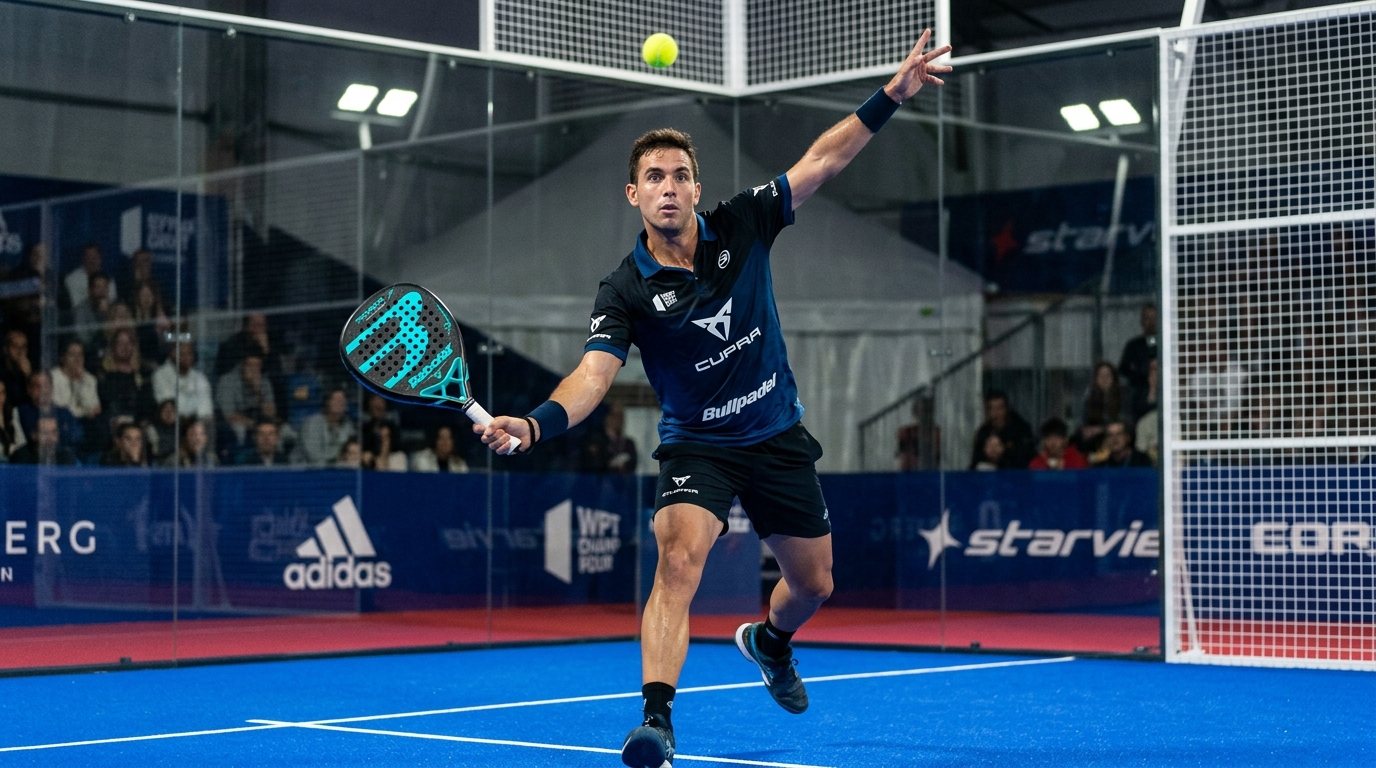
If the Bandeja is an elegant shield that preserves the net, the Víbora (viper) is a poison-tipped dagger. It is the most feared offensive stroke in modern padel. Unlike the Bandeja, which is hit with patient 65% power, the Víbora is struck with 80% to 90% racquet-head acceleration to inflict total defensive panic.
The primary differentiator lies in the rotational axis of spin. While the Bandeja applies horizontal slice (backspin), the Víbora cuts violently across the outside lateral curvature of the ball, imparting heavy, biting sidespin (lateral cut).
The Biomechanics of the Viper Whip
Preparation for the Víbora mirrors a high-level tennis slice serve. The paddle drops behind your neck in a relaxed loop, with your elbow cocked high above your right shoulder. As you uncoil your torso, you lead with the elbow and accelerate the paddle around the right equator of the ball (cutting from 3 o’clock to 9 o’clock across the ball).
The wrist acts like a whip cracking at impact. The kinetic sensation is not a push; it is an aggressive wrapping motion where the carbon face grips the felt of the ball for a split-millisecond before releasing it on a laser-sharp diagonal trajectory.
Glass Wall Ricochet Chaos
When a ball spinning rapidly on its vertical axis collides with smooth tempered glass, the Magnus effect and surface friction combine to create violent lateral deviations. Aimed diagonally into the opponent’s corner, a Víbora that hits the side glass will hug the wall and skid horizontally along the baseline, preventing the defender from positioning their paddle behind the ball. If aimed directly into the double-glass corner (doble pared), the sidespin causes the rebound to squirt away from the defender’s body at acute, unpredictable angles.
4. Side-by-Side Biomechanical Comparison Matrix
To eliminate confusion on the court, study this technical reference matrix comparing the biomechanical setup, contact geometry, and tactical objectives of all four primary overhead strokes:
| Stroke | Tactical Mission | Contact Point | Spin Profile | Optimal Speed |
|---|---|---|---|---|
| Bandeja | Neutralize Lob / Hold Net | 2–3 o'clock (Eye level, lateral) | Pure Backspin Slice | 60% – 70% |
| Víbora | Aggressive Wall Puncture | Behind head / Right ear | Violent Lateral Sidespin | 80% – 90% |
| Rulo a la Verja | Target Metallic Side Fence | 11–12 o'clock (Apex reach) | Curved Topspin Kick | 50% – 65% |
| Por Tres Smash | Finish Point Over 3m Wall | 12 o'clock (Above head) | Extreme Topspin Kick | 90% – 100% |
5. The Rulo a la Verja: The Curved Fence Assassin
Pioneered by left-side specialists (Revés) like Paquito Navarro, Franco Stupaczuk, and Juan Lebrón, the Rulo is one of the most intellectually satisfying strokes in the sport. It is deployed when an opponent hits a high, floating lob directed toward your non-dominant shoulder while you are standing near the middle of the court.
In this awkward positioning, executing a Bandeja is mechanically clumsy because your body is jammed. Trying to hit a power smash will result in catching the ball off-balance behind your head. Instead, you reach up with a bent elbow, allow the ball to drop slightly above eye level, and execute a slow, exaggerated windshield-wiper loop over the top of the ball.
This motion imparts heavy, dipping topspin. The ball arcs gracefully over the net at moderate speed (50% to 65% power) and dives sharply into the opponent’s side metallic mesh fence (la verja).
Unlike tempered glass, which rebounds balls at predictable geometric angles, the steel wire mesh absorbs kinetic velocity and deflects the ball randomly—sometimes dropping it dead to the floor, sometimes shooting it backwards into the glass. If your opponent does manage to reach it, their return is almost always a panicked floater that your partner at the net puts away with an easy volley.
6. The Power Finishers: Remate Por 3, Por 4 & Bring-Back Smashes
When the tactical construction is complete and the defending team finally coughs up a short, imperfect lob within 2.5 meters of the net, you earn the right to pull the trigger on a finishing smash. In elite padel, finishing smashes are categorized by their geometric trajectory:
The Remate Por Tres (Out Over the 3m Side Wall)
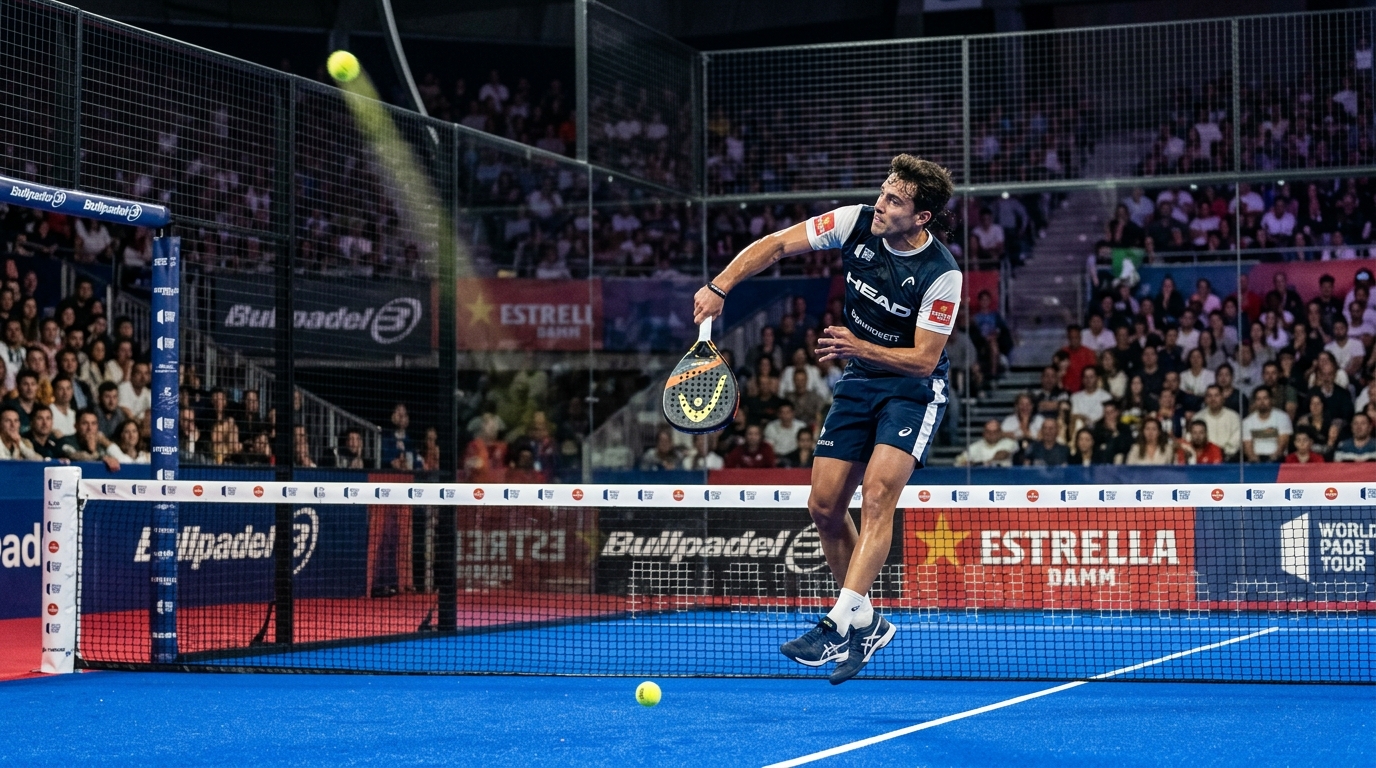
The Por Tres is the most iconic attacking shot in the sport. The player strikes the ball with extreme kick topspin (brushing from 7 o’clock to 1 o’clock across the ball) while jumping forward into the court. The ball strikes the opponent’s turf approximately 1.5 meters in front of their back glass. Because of the extreme topspin, the ball grips the court floor and kicks steeply upward, striking the back glass near the 3-meter mark. The angle of incidence reflects the ball diagonally outward, clearing the 3-meter side wall and sailing out of the stadium.
Rule Highlight: Under FIP rules, if the court has external out-of-bounds clearance, defending players are legally permitted to sprint through the court doors and return the ball into your court before it bounces twice on the outside concrete.
The Remate Por Cuatro (Clearing the 4m Back Wall)
Executed only when an opponent’s ball sits directly above the white net tape. The player leaps vertically and strikes the ball straight down into the opposing turf near the service line with 100% brute power. The ball bounces vertically with such explosive velocity that it clears the entire 4-meter tempered back glass wall. A Por Cuatro is an absolute, unreturnable winner—no defender can recover a ball that clears the back wall.
The Bring-Back Smash (Traérsela a tu Campo)
When court conditions are fast (warm weather, low humidity, new high-pressure balls), players can hit a flat-topspin smash from near the net straight into the opponent’s back glass so that it rebounds all the way back across the net and lands on their own side of the court. Once the ball bounces on your side of the net without the opponent touching it, the point is automatically won.
7. The 0.3-Second Overhead Decision Flowchart
When an opponent lobs over your head, human reaction time gives you approximately 300 milliseconds to choose your stroke. Use this mental flowchart:
1. Depth Assessment: Are you inside 2.5 meters from the net?
YES: Pull the trigger. You are in kill territory. Leap and execute the Por Tres kick smash cross-court or bring the ball back into your own court.
2. Lateral Spacing: Are you between 3 and 5 meters, with the ball to your dominant side?
YES: Attack with the Víbora. Target the opponent’s deep corner double-glass or fire across their body into the side fence.
3. Pressure Defense: Are you pushed backward beyond the service line?
YES: Play a stabilizing Bandeja. Slice it with 65% speed deep into the opponent’s back glass, recover your balance, and sprint back to the net with your partner.
4. Awkward Body Position: Is the lob floating directly over your non-dominant shoulder?
YES: Deploy the Rulo. Wrap gentle topspin around the ball and dip it sharply into the opposing metallic side fence.
8. 7 Mechanical Sins in Padel Overheads
Avoid these seven technical flaws that hold 90% of intermediate players back from competitive mastery:
- Backpedaling Chest-Forward: Running backwards facing the net destroys your balance, restricts shoulder rotation, and guarantees you will hit the ball behind your head. Always turn sideways on step one.
- Dropping the Non-Dominant Guide Arm: Your non-dominant arm is your targeting radar and counterbalance. If it drops early, your shoulder alignment collapses, and your shot dives into the net tape.
- Overhitting the Bandeja with 100% Muscle: The Bandeja requires touch, backspin, and depth. Muscling it causes the ball to kick high off the back glass into an easy counter-attack.
- Smashing from the Baseline: Hitting a smash from behind the service line is a statistical gift to your opponents. Unless you have world-class height and power, smashes from deep court will rebound into easy putaways.
- Loosening the Continental Grip: Switching to a Western or Eastern grip closes the paddle face, making it impossible to slice low wall balls or maintain touch on the Bandeja.
- Static Feet After Impact: Watching your beautiful overhead instead of moving is a rookie trap. The moment you strike the ball, take three aggressive steps forward to reclaim the 2-meter attacking line.
- Ignoring Partner Position: If you are pulled out of position to hit a deep Bandeja, your partner must slide over to cover the middle channel until you recover. Communication is half the battle.
9. Championship Drills: Solo Wall & Basket Progressions
Refine your overhead execution with these proven coaching routines:
Drill 1: The Solo Back-Glass Bandeja Loop (10 Minutes)
Stand 3 meters from your own back glass wall. Toss the ball high behind you, pivot sideways, let the ball rebound forward off the glass, and execute a controlled, sliced Bandeja right back into the glass. Maintain continuous rhythm for 20 consecutive repetitions to groove the horizontal slicing feel.
Drill 2: The Two-Touch Basket Progression (Partner Drill)
Your partner stands at the opposite baseline feeding high lobs. On feed #1, backpedal sideways and hit a controlled Bandeja crosscourt to the back corner. Immediately sprint forward 2 meters, touch the net with your paddle, then backpedal again to hit a high-paced Víbora on feed #2. Repeat for 10 cycles to simulate tournament rally tempo.
10. Frequently Asked Coaching Clinic Questions
What is the main technical difference between a Bandeja and a Víbora?
When should you hit a Por Tres (Remate por 3) smash?
Why do flat tennis smashes fail in padel?
What is the Rulo overhead and when is it used?
How do you prevent elbow and shoulder pain when practicing padel overheads?
Level Up Your Padel IQ: Next Masterclasses
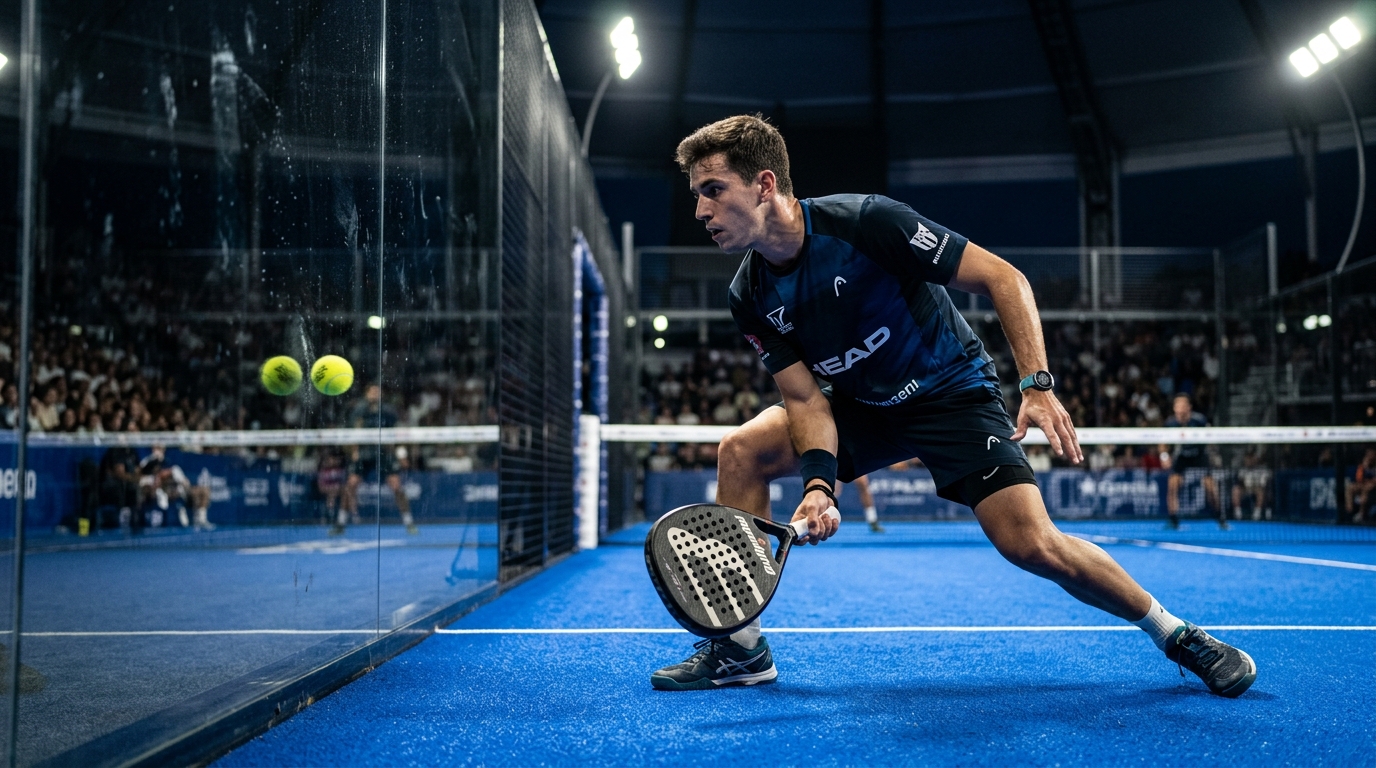 Wall Defense
Mastering the Glass in Padel: Wall Physics & Rebound Defense
Master rebound angles, corner double-glass (doble pared que abre vs cierra), and counter with devastating bajadas.
 Player Transition
Tennis to Padel Transition Playbook: 7 Fatal Habits to Unlearn
Discover why big backswings and topspin backfire in the cage, and how to master soft touch and glass rebounds.