Padel Shoes vs. Tennis Shoes Guide (2026): Herringbone vs. Omni Soles, Sand Turf Mechanics & Injury Prevention
Beginners obsess over buying a $350 diamond carbon racket while walking onto a sand-dressed artificial turf court wearing running sneakers or hardcourt shoes. In padel, your racket wins you points—but your shoes keep you out of the orthopedic surgeon's operating theater. Here is the definitive sports science guide to outsoles, sand friction dynamics, rotational pivot discs, and knee ligament preservation.
📑 Playbook Table of Contents
1. The Unique Physics of Sand-Dressed Artificial Turf
To understand why specialized footwear is biologically necessary, you must examine the exact interface between your feet and the ground. A regulation 10m × 20m padel court is constructed from 10mm to 12mm high monofilament or texturized polyethylene artificial turf laid directly over porous concrete or asphalt.
Distributed across this synthetic turf is between 1,800 kg and 3,200 kg of microscopic kiln-dried silica sand (specifically 0.2mm–0.8mm round-grain quartz sand). The sand performs three vital functions: it ballasts the turf carpet without gluing it to the sub-base, keeps the synthetic fibers upright, and ensures a predictable vertical ball rebound.
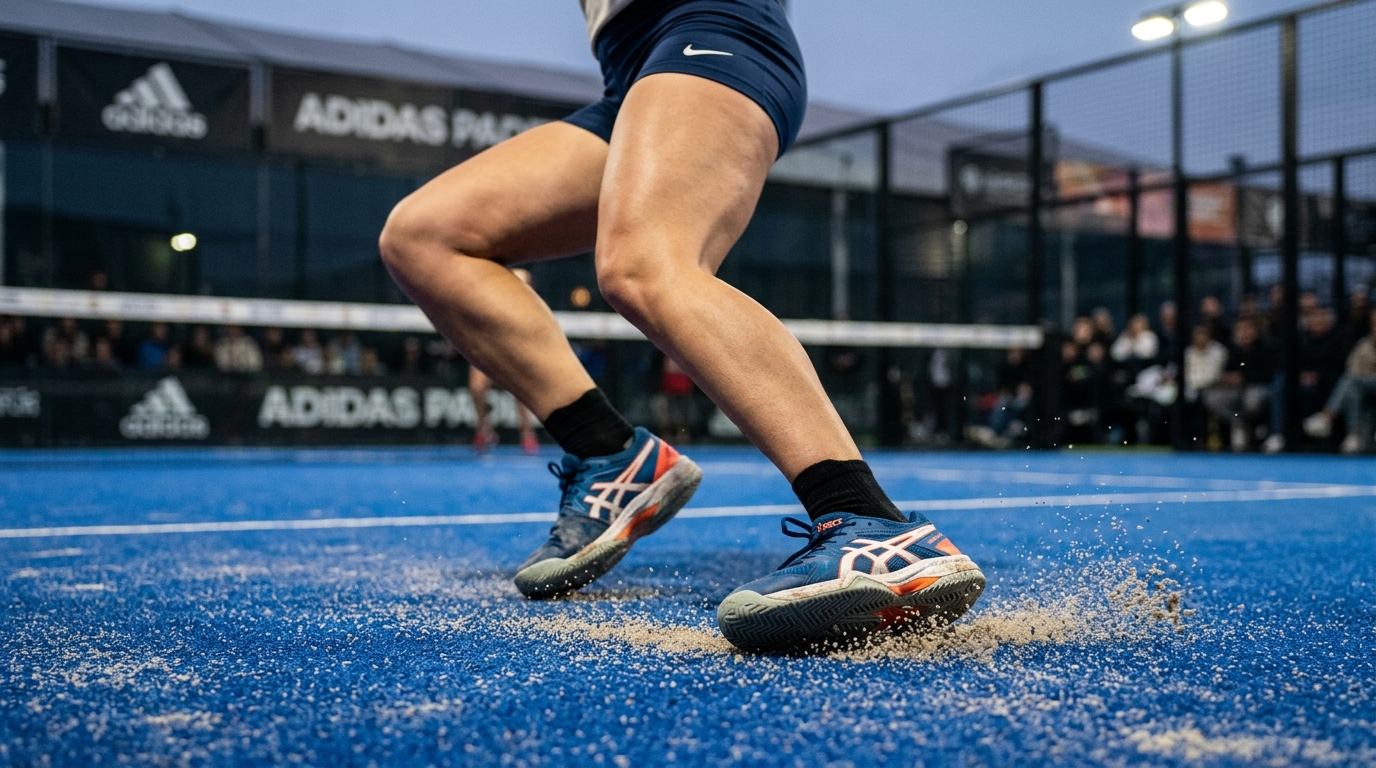
However, this sand creates an extraordinary biomechanical challenge: variable micro-friction. On the high-traffic baseline and central service line "T", player footsteps kick the sand away, exposing bare polyethylene grass fibers that generate high rubber-on-plastic friction. Near the glass walls and corners, the sand accumulates in deep micro-dunes, acting like millions of microscopic ball bearings.
During a single rally, you will transition from a high-grip turf zone into a loose-sand slide zone in less than 0.3 seconds. Footwear that cannot dynamically channel sand away will cause you to slip like you are on an oil slick, while footwear with excessive rubber bite will lock into the carpet during a pivot, transferring explosive torsional torque directly into your knee joint.
2. Kinematics of Padel vs. Tennis Movement
Tennis and padel are often grouped together as racquet sports, but their physiological loading patterns are radically different:
- Tennis Kinematics: Dominated by linear acceleration and deceleration over 4 to 8 meters. Players sprint laterally, plant on the outside foot with a long sliding brake (on clay) or a rubber-skid stop (on hardcourt), and transfer weight back into the court. Rotational turns are generally gradual.
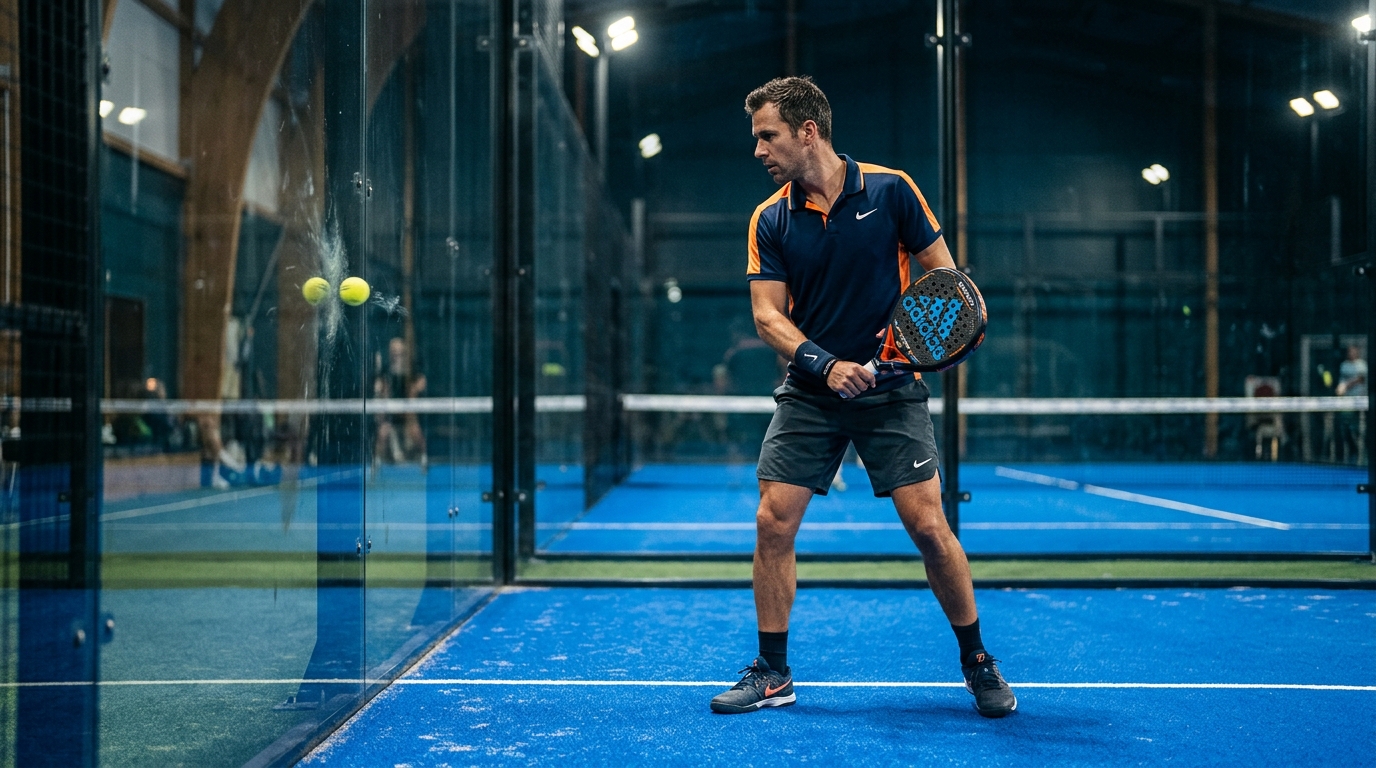
- Padel Kinematics: Characterized by ultra-short micro-bursts of 1 to 3 meters, punctuated by instant 180° and 360° rotational spins. Players must sprint toward the back glass, turn their entire torso while tracking a rebounding ball, spin on the ball of their foot to face forward, and immediately sprint back to the net.
Because padel takes place within an enclosed 200 m² cage, the frequency of direction changes per minute is roughly 2.8 times higher than in tennis. This creates immense lateral shear stresses on the subtalar joint of the ankle and intense rotational shear on the patellar tendon and meniscus.
3. Outsole Tread Engineering: Herringbone vs. Omni vs. Hybrid
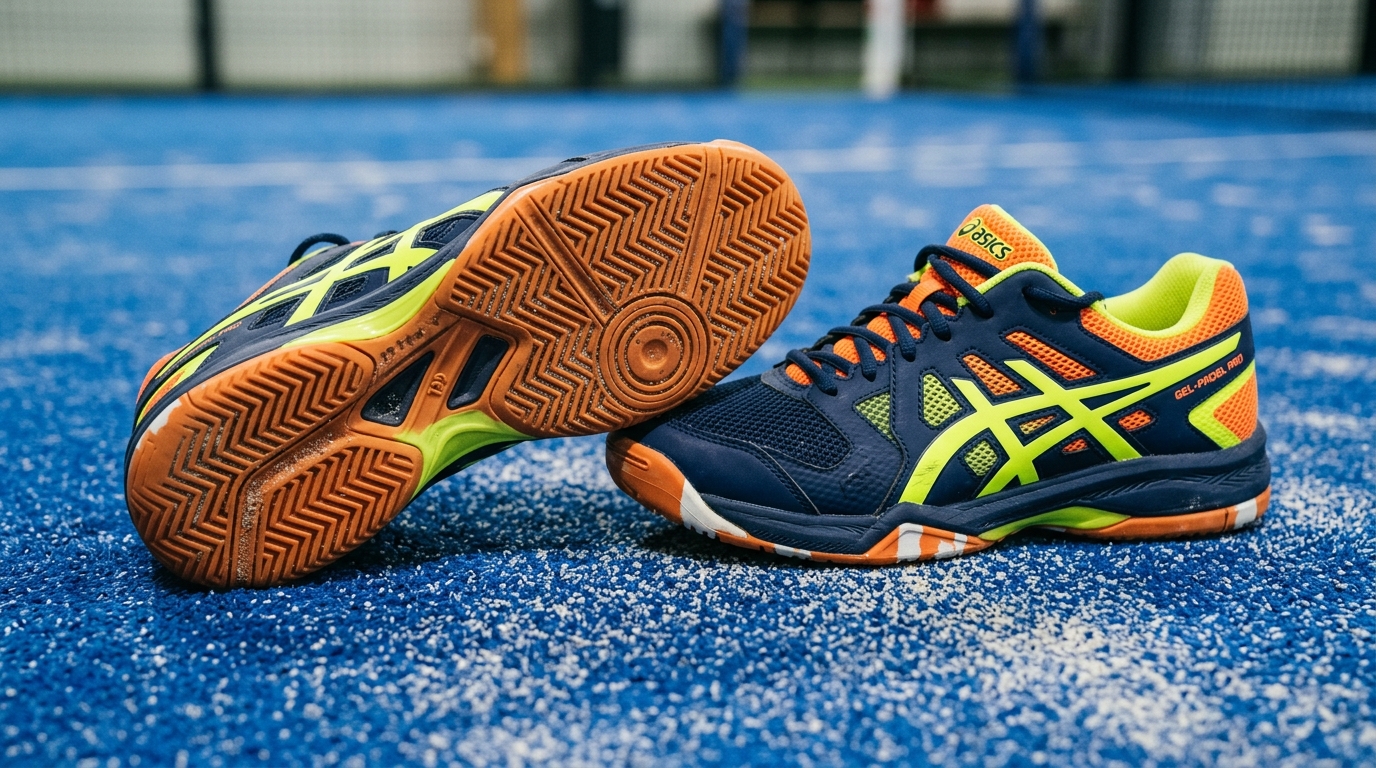
The bottom of a padel shoe is not just rubber; it is an engineered pneumatic fluid dispersal system designed to manage millions of silica quartz grains. Manufacturers utilize three primary outsole configurations:
A. The Deep Herringbone Sole (Suela Espiga / Clay)
The herringbone pattern features continuous zig-zag chevron grooves cut into high-density rubber compounds. In dedicated padel shoes, these grooves are typically 2.8mm to 3.2mm deep—significantly deeper than standard hardcourt tennis shoes.
How It Works: When you plant your foot, the downward pressure forces the silica sand into the triangular chevron channels. The sand is channeled laterally outward away from the center of the tread, allowing the rubber edges to bite directly into the artificial grass fibers. Furthermore, when you execute an aggressive lunge, the parallel zig-zag ribs allow a predictable, controlled micro-slide, dissipating kinetic energy before coming to a smooth stop.
B. The Omni Sole (Suela de Puntos / Dimple Dot)
The Omni sole was the original padel outsole developed in Spain in the 1990s. It features hundreds of small, circular rubber dimples or conical studs (1.5mm–2mm in diameter) distributed uniformly across the entire bottom plate.
How It Works: The circular dots penetrate between the synthetic grass blades, providing unmatched mechanical interlocking grip on older courts with minimal sand. However, on modern courts with heavy sand dressing, the small dimples get clogged with quartz granules, turning the sole into a slippery plastic surface. Additionally, Omni soles wear down much faster than herringbone treads under abrasive friction.
C. Modern Tournament Hybrid Soles (The Premier Padel Standard)
On modern professional circuits (Premier Padel and World Padel Tour), courts use specialized texturized monofilament turf that requires less sand. To optimize performance across all court conditions, brands like Asics, Babolat, Bullpadel, and Head engineered hybrid outsoles:
- Inner Edge: Deep herringbone tread for maximum propulsion during forward sprint acceleration and sand clearance.
- Outer Edge & Heel: Directional omni dimples and flex grooves that allow micro-lateral sliding without catching.
- Forefoot Disc: Integrated rotational pivot rings (Rotax) to facilitate effortless 360-degree corner spins.
4. The Rotational Pivot Point: ACL & Meniscus Preservation
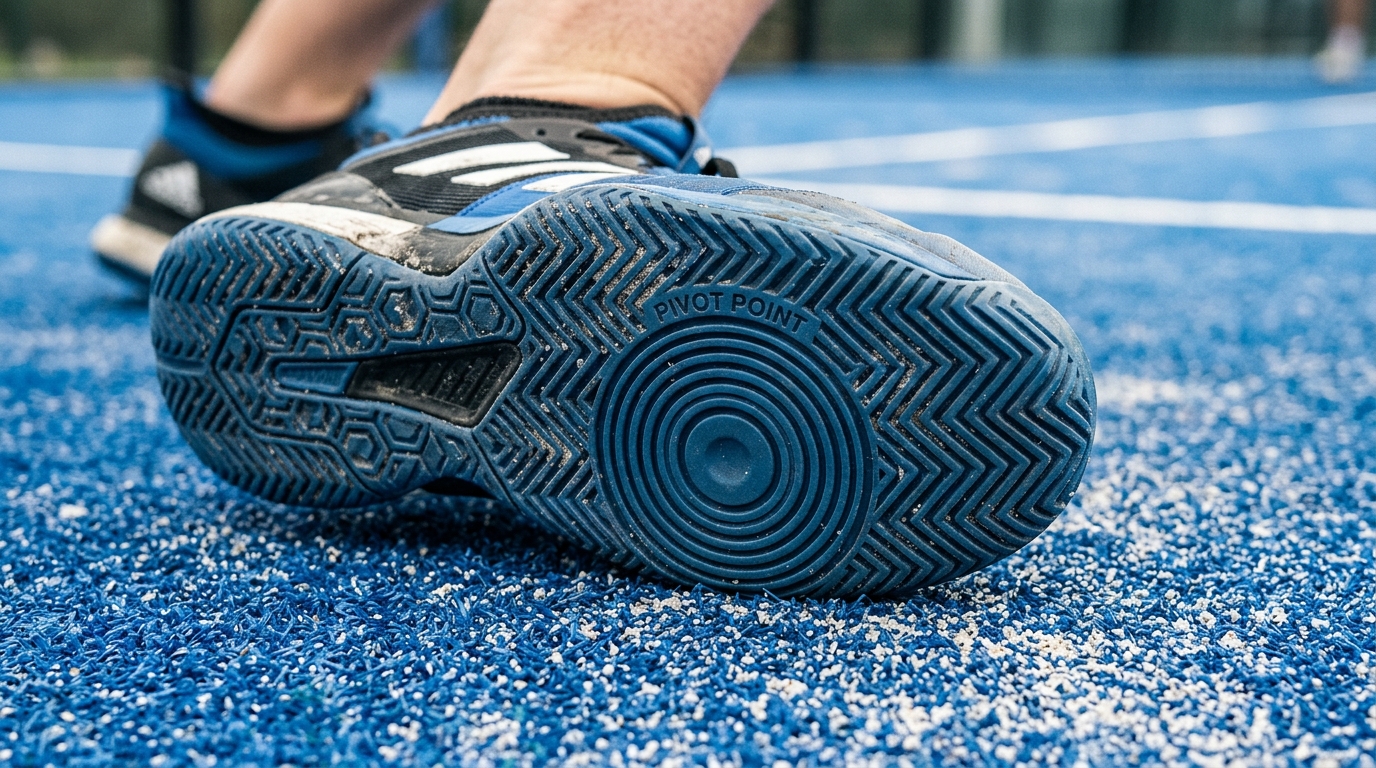
If you inspect the bottom of a high-performance padel shoe like the Bullpadel Hack Hybrid, Babolat Jet Premura 2, or Head Motion Pro, you will notice one feature that does not exist on tennis shoes: a circular, concentric ring disc located directly beneath the first metatarsophalangeal (MTP) joint—the ball of the big toe.
In orthopedic sports medicine, this is known as the rotational release valve. When you track a ball rebounding off the side glass, your brain commands an instant 180° rotation. On a tennis hardcourt, you pivot by unweighting your foot. On padel artificial turf, you are spinning while your body weight is fully pressed into the synthetic fibers.
If you are wearing a tennis shoe with continuous longitudinal tread patterns, the tread teeth interlock with the grass fibers. When your femur and tibia twist, the shoe remains locked in place. The resulting torsional stress is absorbed entirely by your anterior cruciate ligament (ACL) and medial meniscus. Over months of play, this causes micro-tears, patellofemoral pain syndrome, or in catastrophic cases, complete ligament rupture.
The circular padel pivot disc eliminates this hazard. Its concentric circular grooves allow the ball of your foot to spin with low rotational friction while maintaining complete vertical traction. Your foot rotates smoothly with your hips, keeping your kinetic chain aligned.
5. Lateral Stability, TPU Bridges & Low Stack Height
Beyond the outsole tread, padel shoes incorporate specialized structural engineering throughout the midsole and upper:
Lateral Outriggers (Anti-Roll Wings)
A flared rubber flange extending outward along the lateral forefoot edge. When you plant hard laterally to dig out a low ball near the side mesh, the outrigger broadens your base of support, physically preventing the shoe from rolling over your ankle bone.
TPU Anti-Torsion Shank
A rigid thermoplastic polyurethane bridge embedded inside the midfoot arch. It resists longitudinal twisting when you brake abruptly, ensuring that the shoe flexes only across the natural metatarsal break line and never twists beneath the arch.
Reinforced Medial Drag Guard
In padel, players constantly lunge deep into corners, dragging the medial inner toe of their trailing foot across the abrasive silica sand. Dedicated padel shoes wrap thick molded polyurethane or rubber over the inner toe box to prevent sandpaper blowouts.
6. Can You Wear Tennis Shoes? A Systematic Surface Analysis
The short answer: It depends entirely on which type of tennis shoe you own.
Clay Court Tennis Shoes (Passable & Safe Alternative)
If you own clay-court tennis shoes with a 100% full herringbone tread, they are very safe and perform reasonably well on padel courts. The deep chevron channels effectively evacuate silica sand, providing strong forward acceleration and predictable sliding characteristics. However, clay shoes generally lack the circular rotational pivot disc and the reinforced medial toe bumper required for padel corner lunges.
Hardcourt / All-Court Tennis Shoes (Dangerous & Not Recommended)
Hardcourt tennis shoes feature flat, shallow, multi-directional rubber grooves designed to maximize contact area on rough acrylic concrete. When introduced to a sand-dressed padel court, they perform terribly:
- In Deep Sand: The shallow grooves immediately pack full of sand, causing you to slip unpredictably when defending near the glass.
- On Bare Turf: The wide rubber contact patches grab the artificial grass fibers abruptly ("turf lock"), creating severe shock that travels into knees and lower back.
7. The Running Shoe Disaster: Ankle Inversion Rollover
The single most dangerous footwear choice on a padel court is a modern cushioned running shoe. Running shoes are masterpieces of forward biomechanical propulsion: they feature 32mm–40mm thick pillowy EVA/PEBA foam midsoles, steep 10mm heel drops, and featherlight breathable mesh uppers designed with zero lateral reinforcement.
When you step onto a padel court in running shoes and attempt a sudden lateral cut at the net, here is the catastrophic sequence that occurs:
- Your foot lands laterally with up to 4× your body weight in dynamic force.
- The ultra-soft 35mm foam midsole compresses unevenly under the lateral border of your foot.
- The high stack height acts as a mechanical lever arm, tilting your footbed sharply inward.
- Because running shoe mesh has no structural TPU overlays, the fabric stretches, allowing your entire foot to slide completely off the top of the sole platform.
- Your ankle undergoes extreme inversion (turning outward), tearing the anterior talofibular ligament (ATFL) and often fracturing the lateral malleolus of the fibula.
Never, under any circumstances, play padel in running or training sneakers. If you do not have dedicated padel shoes, play in clay tennis shoes or rent a pair from your club.
8. Footwear Engineering Comparison Matrix
| Shoe Category | Outsole Pattern | Rotational Freedom | Lateral Lock | Padel Safety Score |
|---|---|---|---|---|
| Dedicated Padel Shoe | Herringbone / Hybrid + Rotax Pivot | Optimal (Pivot Ring) | Extreme (Outriggers & TPU) | 10 / 10 (Gold Standard) |
| Clay Tennis Shoe | Full Deep Herringbone | Moderate (No Pivot Ring) | Very High | 8.5 / 10 (Safe Backup) |
| Hardcourt Tennis Shoe | Modified Flat Concrete Grip | Poor (Turf Lock Risk) | High | 5 / 10 (Hazardous) |
| Indoor Squash/Court | Smooth Flat Gum Rubber | Zero Traction in Sand | Moderate | 3 / 10 (Ice Skate Effect) |
| Running Sneaker | Linear Flex Grooves | Hazardous | Zero (Rollover Danger) | 1 / 10 (Extreme Danger) |
9. Top Footwear Recommendations for 2026
Based on extensive laboratory testing and player feedback on sand-dressed turf, here are the premier padel footwear models for the 2026 season:
Asics Gel-Resolution Padel
Equipped with FlyteFoam midsole cushioning, Dynawall lateral stability wings, and a padel-engineered herringbone outsole with integrated forefoot flexion channels. The ultimate choice for heavier players or those with past knee issues.
Babolat Jet Premura 2
Developed jointly with Michelin. Features a 100% padel-specific sole with 360-degree flex grooves, two lateral ventilation windows for intense heat dissipation, and an ultralight Matryx EVO woven upper.
Bullpadel Hack Hybrid Fly
The competition shoe of top Premier Padel professionals. Features the patented Rotax disc in the sole, a seamless knit sock collar for sand exclusion, and a TPU bridge for torsional stability.
10. Maintenance, Sand Care & Replacement Lifespan
Even the finest padel shoes degrade under the intense abrasive friction of kiln-dried silica sand. Follow these essential care and replacement guidelines:
- The 1mm Tread Threshold: When the central herringbone chevron grooves wear down below 1mm in depth, the shoe can no longer evacuate sand effectively. You are now playing on bald tires. Replace them immediately.
- Midsole Compression Fatigue: EVA foam midsoles lose approximately 30% of their shock-attenuation capacity after 80 hours of play. If your knees or Achilles tendons feel unusually sore after matches, your midsoles have bottomed out.
- Sand Evacuation Protocol: After every session, remove the orthotic insoles and tap the shoes upside down to dump accumulated quartz sand. Sand grains trapped under the insole act like sandpaper, wearing holes through the footbed strobel stitching.
- Never Machine Wash: Submerging padel shoes in hot water dissolves the polyurethane adhesives binding the outsole to the midsole. Clean them with a stiff nylon brush and a damp microfiber cloth.
Frequently Asked Questions About Padel Footwear
Level Up Your Padel IQ: Next Masterclasses
 Sports Biomechanics
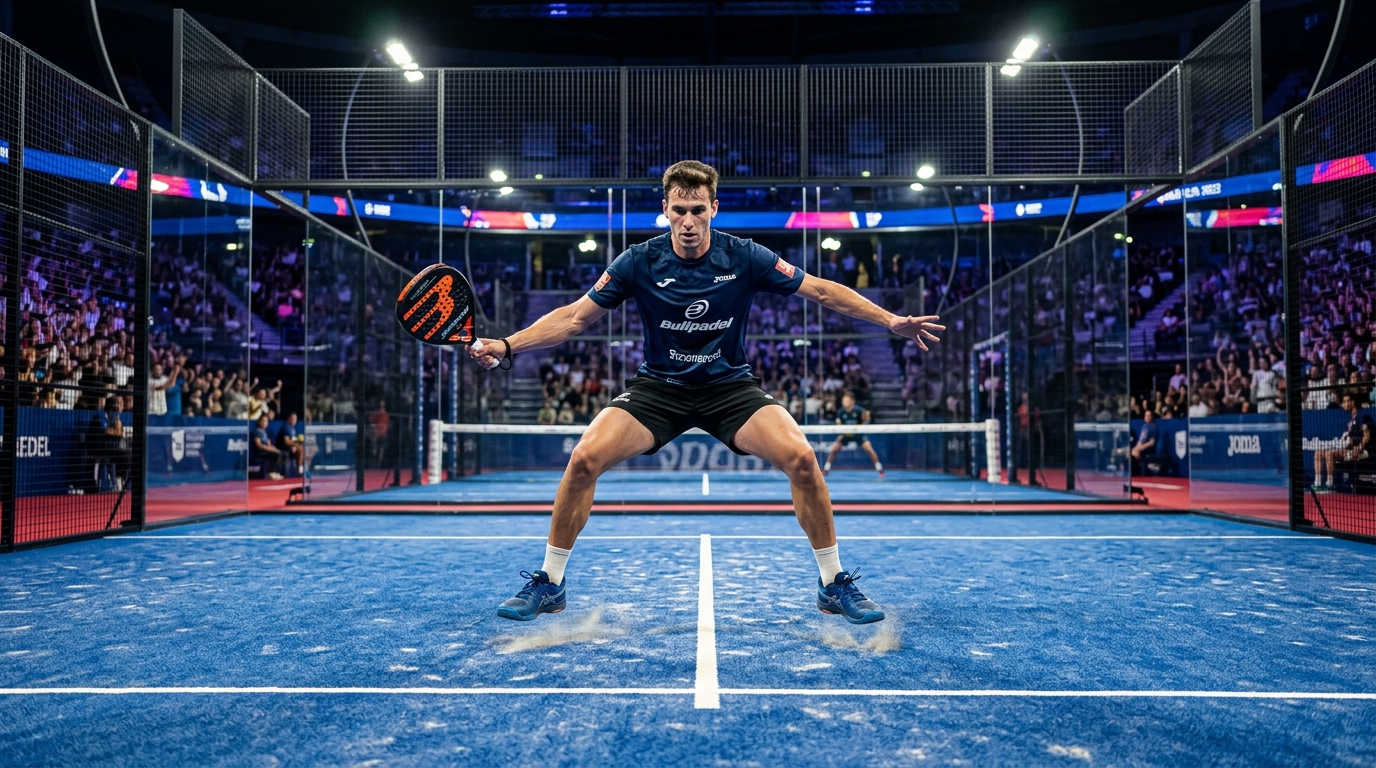
Padel Footwork Biomechanics & Injury Prevention
Master split-step timing, lateral kinetic chains, and protect knees and ankles on artificial turf.
 Player Development
Tennis to Padel Transition Playbook: 7 Fatal Habits to Unlearn
Unlearn looping backswings, neutralize heavy topspin, and master cage geometry and wall trust.