Padel Footwork, Biomechanics & Injury Prevention: The Complete Movement Playbook
Mastering proper padel footwork, understanding padel biomechanics, and applying proactive padel injury prevention protocols are the three pillars that separate plateaued amateurs from commanding tournament athletes. Learn how to protect your joints while moving faster across the turf.
📑 Playbook Table of Contents
- The Biomechanics of Padel vs. Tennis Movement
- The Five Pillars of Padel Footwork & Drills
- Turf Friction, Sand Dispersion & Footwear Engineering
- The Overhead Kinetic Chain in Padel Biomechanics
- Padel Elbow & Padel Injury Prevention Strategies
- Lower Extremity Padel Injury Prevention: Knees & Calves
- Dynamic Padel Footwork Drills & 12-Minute Warmup
- Biomechanics, Padel Elbow & Injury Prevention FAQ
The Biomechanics of Padel vs. Tennis Movement
The most common mistake athletes make when transitioning from tennis, squash, or pickleball into padel is assuming that court movement is universal. While tennis demands expansive linear sprints, open-stance baseline slides, and violent deceleration over vast 23.77-meter court baselines, padel biomechanics operates in an intimate 10m x 20m glass cage. In padel, court coverage is not about top-end sprint velocity; it is an intricate dance of spatial calibration, deceleration economy, and micro-positioning.
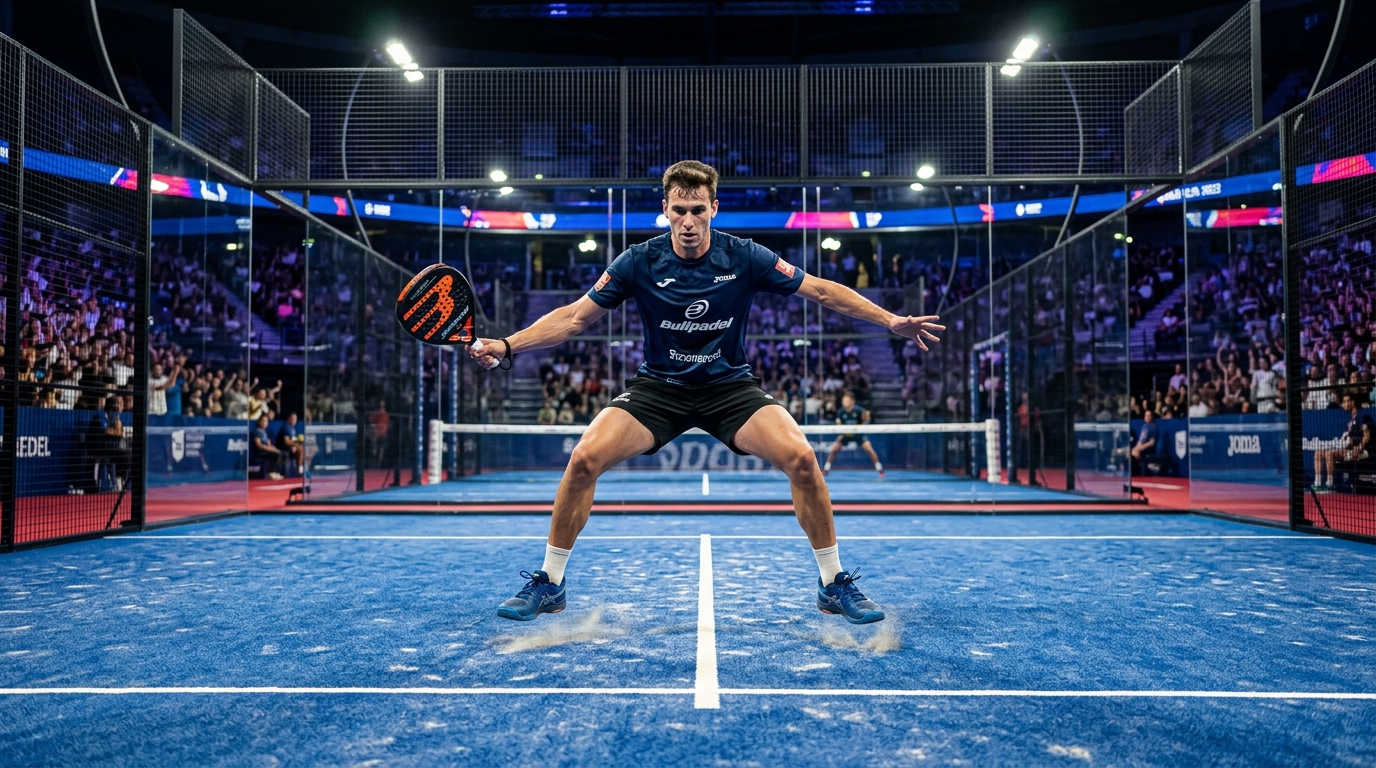
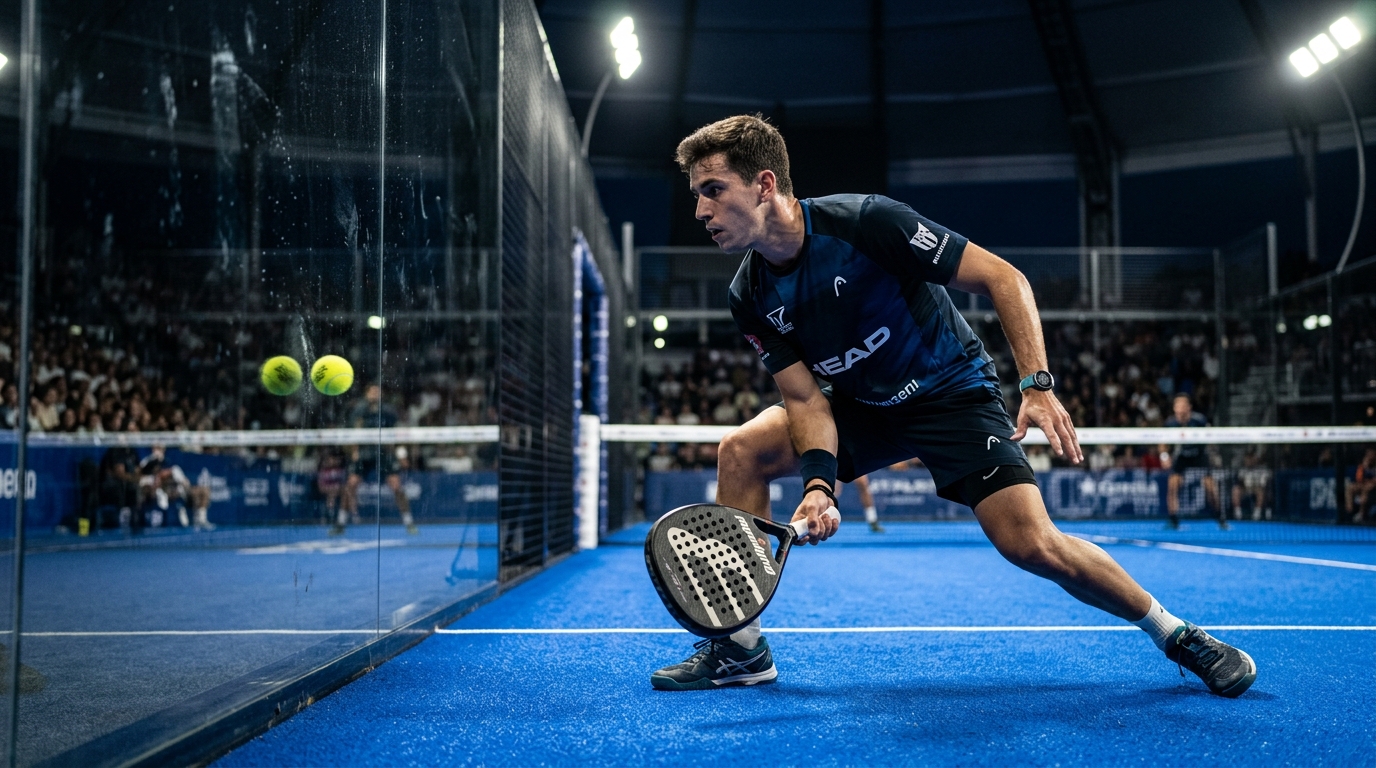
When a tennis player strikes a baseline groundstroke, their center of mass (COM) often finishes tall, rotating into the open court with substantial follow-through. In padel biomechanics, that expansive follow-through gets punished immediately. The ball strikes the back glass, rebounds forward into open court space, and leaves the player facing the wrong direction. Establishing disciplined padel footwork keeps your base compact, balanced, and ready for immediate secondary rebounds.
Padel rallies average 8 to 14 shots per point at competitive levels—nearly three times the duration of a tennis point. Because the glass perimeter keeps live balls in play, a player undergoes between 120 and 200 high-intensity directional changes in a three-set match. Proactive padel injury prevention requires training the kinetic chain so that these rapid cuts are absorbed by large muscle groups rather than connective joints.
Center of Gravity (COG) and Elastic Energy Conservation
In human movement science, lowering the center of gravity increases lateral stability and dramatically shortens the latency required to redirect momentum. In foundational padel biomechanics, an optimal ready stance demands a flexion of 25° to 35° at the knees and 15° to 20° of hip hinge. This athletic posture pre-stretches the quadriceps, gluteus medius, and Achilles tendon complex, priming the stretch-shortening cycle (SSC).
When an opponent’s drive hits the back glass at 45 km/h, the defender has approximately 0.38 to 0.52 seconds to read the rebound trajectory, track the ball past their hip, and initiate their backswing. Upright players must first bend their knees before pushing off, introducing an unrecoverable 150-millisecond delay. Keeping an athletic, lowered base eliminates this lag, representing the first law of elite padel footwork.
The Five Pillars of Padel Footwork & Movement Patterns
Mastering the technical movements of the sport requires deliberate practice through dedicated padel footwork drills. Elite court agility is built upon five foundational locomotive patterns:
The Padel Split Step (Anticipation Timing)
The padel split step is not a high vertical jump; it is an active, low loading of both feet shoulder-width apart, landing symmetrically on the metatarsal pads (balls of the feet) with unweighted heels.
The Golden Rule of Split Step Timing: The apex of your hop must occur precisely at the moment your opponent strikes the ball. As their racket contacts the ball, your feet touch the turf, using the visual stimulus of the shot trajectory to drive an explosive lateral push-off. Correct padel split step timing eliminates false steps and protects the Achilles tendon from sudden eccentric spikes.
The Lateral Chassé (Side-Step Glide)
When guarding the net or shifting in tandem across the service line with your doubles partner, cross-stepping (crossing one leg in front of the other) is hazardous. It turns your shoulders sideways, blind-spots the court, and momentarily eliminates your ability to change direction.
Execution: Use dynamic side-to-side chassé glides. Push off the outside foot while the inside foot steps outward, keeping the chest facing the opponents and the racket head held high at chest height. Practicing this in daily padel footwork drills preserves your lateral perimeter and prevents ankle rolling.
The Backward Diagonal Drop (Drop-Step)
When opponents lob over your head while you are occupying the net, backpedaling directly in reverse is dangerous. Backpedaling locks the cervical spine, tilts balance onto the heels, and drastically increases the risk of stumbling or colliding with the back glass.
Execution: Immediately drop-step by opening your dominant hip 45 degrees backward. Retreat using crossover or side-skipping steps along a diagonal vector. This keeps your vision locked on the ball while aligning your body sideways for a clinical overhead counter.
The Corner Pivot: "El Giro" (The 360° Glass Turn)
When a deep cross-court ball ricochets into the corner—striking either the side glass then back glass, or back glass then side glass—attempting to run straight at the ball leaves you pinned against the wall with zero swing clearance.
Execution: Rotate your body around the ball rather than chasing its rebound. Plant your front pivot foot and execute a controlled rotational spin ("El Giro") that mirrors the ball's departure trajectory. You finish facing back into the court, perfectly positioned to strike the ball out in front of your body at waist height.
Micro-Adjustment Steps at the Net
Many players commit too early to large strides when attacking volleys, lunging off balance. In padel biomechanics, incoming balls arrive with heavy slice and unpredictable spin off the mesh and composite faces.
Execution: After closing down toward the net, break into three to four rapid "staccato" micro-steps on the balls of your feet. These micro-steps allow you to calibrate your contact point by 5 to 10 centimeters right up to the millisecond of impact, preventing off-center mishits that strain the forearm and provoke padel elbow.
Turf Friction, Sand Dispersion & Footwear Engineering
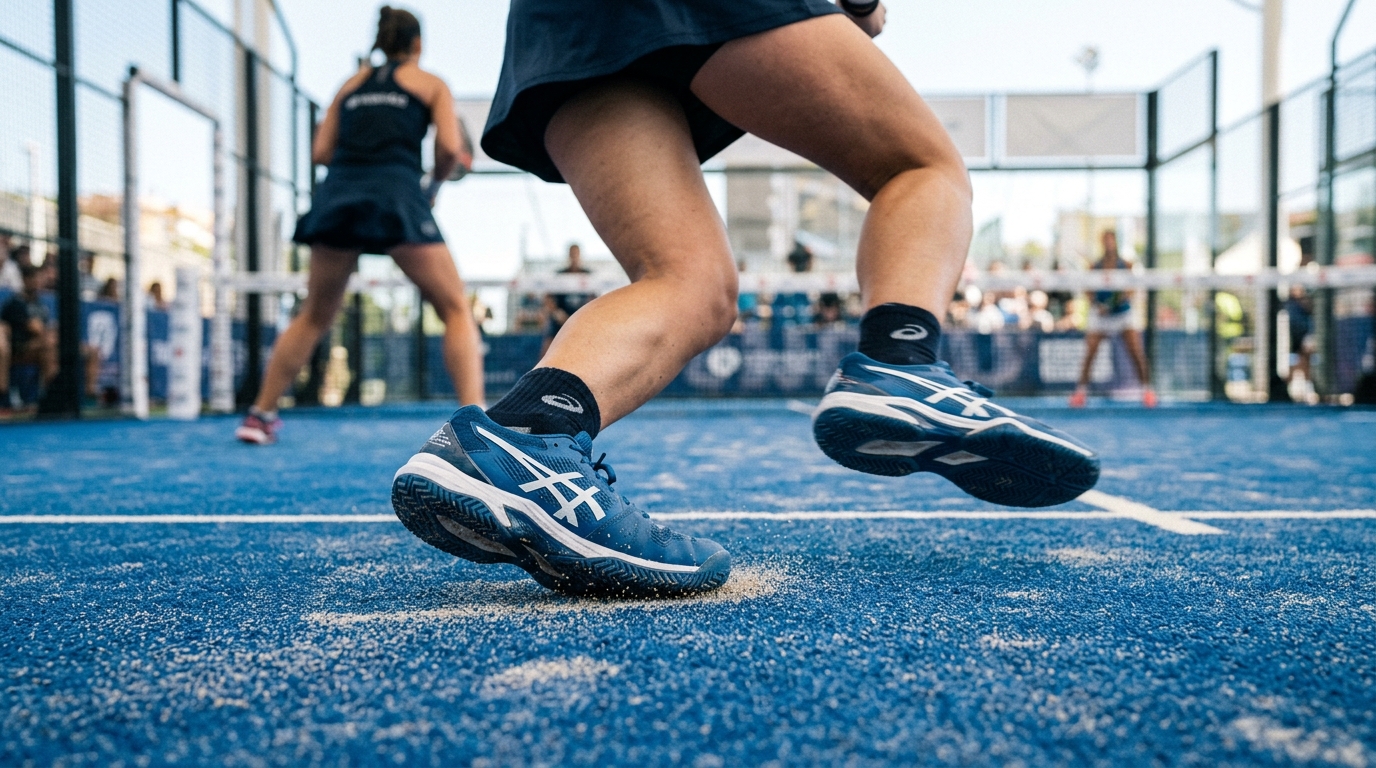
Unlike the uniform friction profile of indoor hardwood or hard tennis asphalt, padel courts utilize synthetic artificial turf infused with fine silica sand (approximately 0.5 to 1.5 kg per square meter depending on monofilament vs. texturized fiber specifications). This sand serves two critical engineering functions: it weights down the carpet backing and facilitates a subtle, controlled micro-slide during sudden decelerations.
However, this dual nature—part turf, part sand—creates one of the most hazardous biomechanical environments in modern sports if a player wears improper footwear. Running shoes, gym trainers, and hard-court tennis shoes feature flat, thick rubber outsoles engineered for forward propulsion or high-friction grip. In the context of padel injury prevention, wearing non-padel shoes leads to two catastrophic mechanical failures:
Hazard A: High-Friction "Turf Catch"
Tread patterns with heavy multi-directional rubber lugs can lock directly into the artificial turf pile. When rotating your torso into a quick corner turn, the shoe remains pinned to the floor while the femur twists violently over the tibia. This rotational shear stress is the leading cause of non-contact ACL tears and meniscus ruptures in amateur padel.
Hazard B: Low-Traction "Sand Slip"
Worn outsoles or flat indoor court shoes fail to displace the loose top layer of silica sand, behaving like ice skates. The foot slides uncontrollably during push-offs, placing immense acute eccentric strain on the Achilles tendon and gastrocnemius (causing calf muscle tears).
The Anatomy of a Dedicated Padel Shoe
To ensure joint longevity and support agile padel footwork, dedicated padel footwear incorporates three structural components:
- Deep Herringbone (Clay / Omni) Tread: A specialized zig-zag grooving (often 3mm deep) that channels loose silica sand outwards, allowing the rubber ridges to make direct contact with the synthetic fibers for predictable grip.
- Forefoot Rotational Pivot Points (Rotox Discs): Circular, low-friction circular pods embedded directly under the first metatarsal head. When pivoting 180° for the "Giro" wall turn, this circular pad allows effortless rotational release, preventing torque from traveling up the knee.
- Reinforced Lateral Outriggers: Reinforced TPU or carbon stability bars flanking the lateral edge of the sole. When a player executes a hard padel split step or stops laterally at the net, these outriggers prevent the ankle from rolling over the shoe bed (inversion ankle sprain).
The Overhead Kinetic Chain in Padel Biomechanics
In human motion analysis, the kinetic chain describes the synchronized transfer of mechanical energy through linked body segments. In tennis, an overhead smash or serve is a vertical catapult: power flows from ground reaction forces through knee extension, hip rotation, spine hyperextension, and ultimately violent internal shoulder rotation with wrist snap at full vertical extension.
Attempting tennis smash mechanics in padel biomechanics is a tactical mistake and an orthopedic risk. A downward tennis smash bounces high off the turf, rebounds high off the opponent's back glass, and provides them with an effortless counter-attack. Furthermore, repeatedly snapping the wrist with a dense, solid-core padel racket places extreme torque on the shoulder rotator cuff and forearm flexors, rapidly accelerating padel elbow symptoms.
1. The Bandeja: Scapular Retraction & Core Plane Stability
The purpose of the Bandeja is defensive transition: maintaining the net position when forced backward by a deep lob. Rather than jumping into vertical extension, the player retreats diagonally, sets their feet in a semi-open base, and raises the hitting elbow bent at 90 degrees at eye level.
- No Wrist Snap: The wrist remains locked in extension (dorsiflexion) with the racket face opened flat like a waiter carrying a tray.
- Thoracic Rotation: In classic padel biomechanics, energy is generated by unwinding the ribcage and obliques horizontally, cutting across the equator of the ball with backspin.
- Low Wall Rebound: The backspin causes the ball to die low when hitting the back glass, denying the opponents any offensive counter-lob.
2. The Víbora: Lateral Pronation & Oblique Whip
The Víbora is an aggressive, high-speed overhead stroke designed to force errors. Biomechanically, it demands strong lateral trunk flexion (side-bending) toward the hitting shoulder.
- Impact Point: Contact is made outside the player’s right ear (for right-handers), brushing around the right side of the ball from 3 o'clock to 9 o'clock.
- Kinetic Transfer: The energy shifts from the rear push-leg through the contralateral hip flexor and core, finishing with a sharp follow-through across the chest. The resulting heavy sidespin forces the ball to carom wildly off the corner side glass.
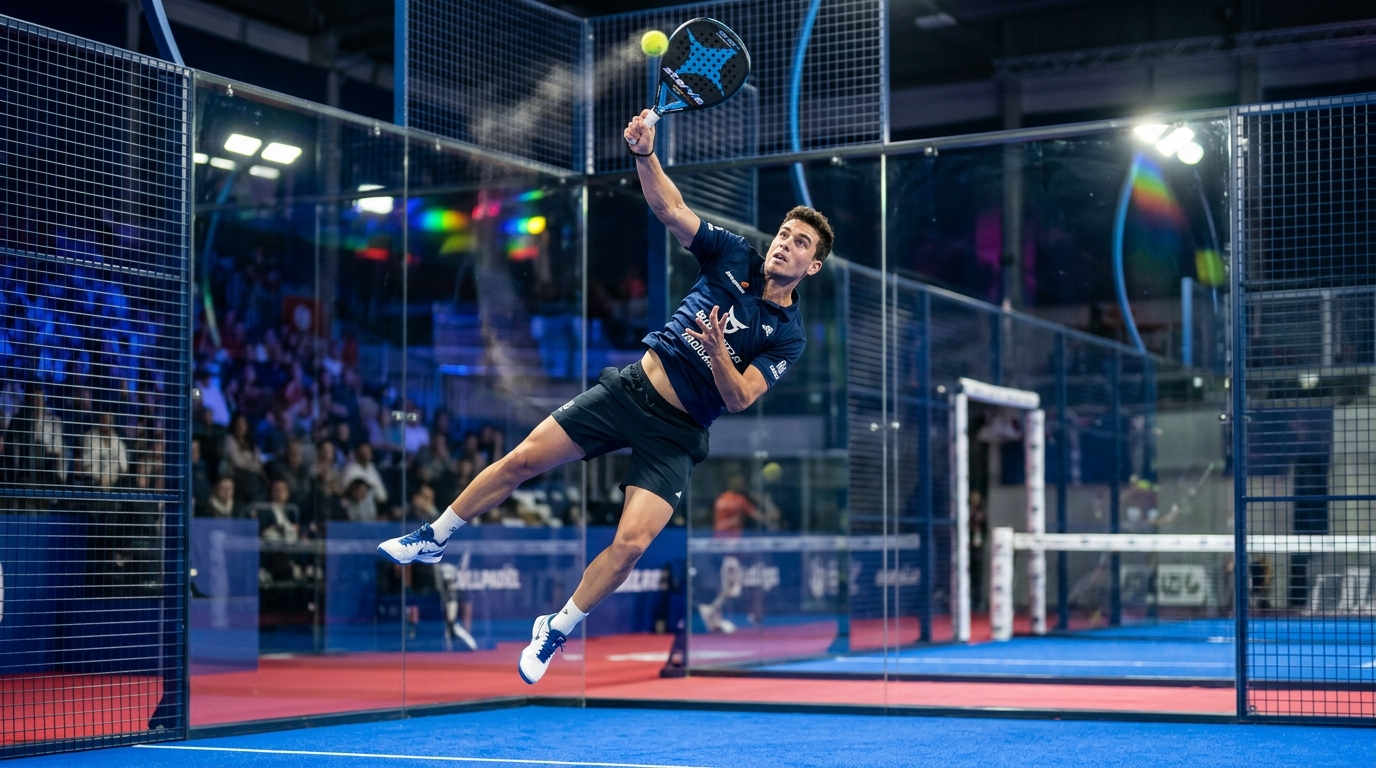
3. The Power Smash (Remate por Tres): Explosive Triple Extension
The iconic "Por Tres" (smashing the ball so that it bounces off the back glass and flies out over the 3-meter side wall) is the only shot where full vertical kinetic recruitment is warranted.
The player must move underneath the ball, initiate explosive triple extension (simultaneous rapid extension of ankles, knees, and hips), arch the spine into an athletic bow, and strike the ball with extreme topspin at the highest point of the reach above their non-dominant shoulder. The topspin creates severe aerodynamic lift after the glass rebound, propelling the ball up and over the outer fence.
Padel Elbow & Padel Injury Prevention Strategies
Lateral epicondylalgia—universally referred to as padel elbow—is the single most prevalent overuse injury in the sport, affecting up to 42% of active amateur and intermediate players. Unlike tennis, where string bed deflection and a flexible graphite throat absorb substantial impact shock, padel rackets are solid composite instruments.
When a solid padel racket strikes a pressurized ball, high-frequency shock waves travel down the carbon handle into the common extensor tendon origin at the lateral epicondyle of the humerus. If the extensor carpi radialis brevis (ECRB) is overloaded, micro-tearing occurs, leading to debilitating tendinopathy. Comprehensive padel injury prevention requires addressing both equipment specifications and swing technique.
The Four Primary Causes of Padel Elbow:
Diamond-shaped rackets feature balance points exceeding 270mm toward the frame tip. While this amplifies smash power, it drastically elevates the rotational inertia (swing weight) during late backhands. Over-taxed forearm tendons must decelerate this lever arm repeatedly, making balance selection critical for padel injury prevention.
High-density EVA foam and rigid 12K/18K carbon surfaces provide pinpoint directional accuracy for elite players, but offer almost zero vibration dampening. In indoor or cooler conditions, the ball hardens, compounding the shock transmission directly into the elbow joint.
Stock padel handles are notoriously short and narrow. When a grip is too thin, the fingers cannot close comfortably; the player compensates by squeezing with excessive clenching force. This continuous isometric forearm contraction starves the tendons of blood flow and triggers acute padel elbow flares.
Striking a backhand behind the body line forces the wrist to flick upward or collapse upon contact. In sound padel biomechanics, backhands must be struck firmly in front of the forward hip, using body weight transfer and the shoulder girdle rather than isolated wrist extension.
The 3-Step Equipment & Biomechanical Cure:
- Switch to Even or Low Balance: Opt for a round or teardrop racket weighing 355g to 365g with an even balance (260–265mm) and a soft polyethylene or medium EVA core to absorb shock waves and alleviate padel elbow stress.
- Install Ergonomic Honeycomb Grips: Replace standard under-grips with an ergonomic honeycomb grip (such as a Hesacore grip) combined with one or two quality overgrips. The hexagonal facets redistribute gripping pressure across the palm, reducing forearm muscle strain by up to 35%.
- Vibration Dampening Inserts: Utilize polymer dampeners (such as ShockOut cylinders) inserted directly into the central holes of the racket face, significantly blunting high-frequency vibrations before they reach your arm.
Lower Extremity Padel Injury Prevention: Knees, Calves & Back
While the upper body absorbs acute impact shock, the lower kinetic chain endures extreme repetitive loads. Effective padel injury prevention requires safeguarding the knees, calves, and lower back against the unique demands of defending low wall rebounds.
1. Patellar Tendinopathy (The "Padel Knee")
When defending balls that bounce low off the back glass, players must drop into deep squats. If a player bends solely at the knees without hinging at the hips, patellofemoral compressive force spikes exponentially.
2. Plantaris & Gastrocnemius Tears ("Tennis Leg")
Exploding from a standstill position to retrieve a drop shot (chiquita) places extreme eccentric tension on the medial head of the calf muscle. Dehydration, cold weather, and lack of dynamic Achilles warmups cause sharp fiber tears. Integrating dynamic calf raises into your padel injury prevention regimen builds resilience against explosive deceleration tears.
3. Lumbar Spine Facet Joint Irritation
Arching the lower back excessively during overhead smashes compresses the posterior facet joints of the lumbar spine. In optimal padel biomechanics, developing thoracic spine mobility and engaging the transverse abdominis ensures that rotation occurs through the mid-back and hips rather than grinding the lower vertebrae.
Dynamic Padel Footwork Drills & The 12-Minute Warmup Routine
Static stretching prior to entering the court reduces muscular force output and does not protect against acute tears. Elite performance requires practicing functional padel footwork drills combined with a structured dynamic warm-up that elevates core temperature, lubricates synovial joints, and primes the nervous system for rapid split-step reactivity.
🏃 Three Essential Padel Footwork Drills for Court Mastery
Start at the net with a split step, chassé laterally to the side mesh, drop-step diagonally back to the glass, and sprint forward into a low volley stance. Repeat for 6 sets of 30 seconds to groove transition endurance.
Position yourself at the service line. Perform a split step, sprint toward the corner, plant the lead pivot foot, and execute a 180° rotation mimicking a double-glass rebound exit. Focus on keeping your weight centered.
Partner or coach feeds rapid balls within a 1-meter radius. Move only using rapid micro-steps on the balls of your feet without lunging, maintaining an active padel split step between each shot.
⚡ The 12-Minute Match Activation Routine for Padel Injury Prevention
Jogging forward and backward across the 10m court width, carioca crossover runs, high knees, butt kicks, and light lateral side-shuffles to raise internal muscle temperature and prepare your padel footwork.
- Walking World's Greatest Stretch: Lunge forward with thoracic rotation to open hips and mid-back.
- Ankle & Achilles Rocks: Flexing the foot against the glass wall to mobilize dorsiflexion.
- Shoulder & Scapular Dislocates: Arm windmills, internal/external rotation drills with light resistance bands.
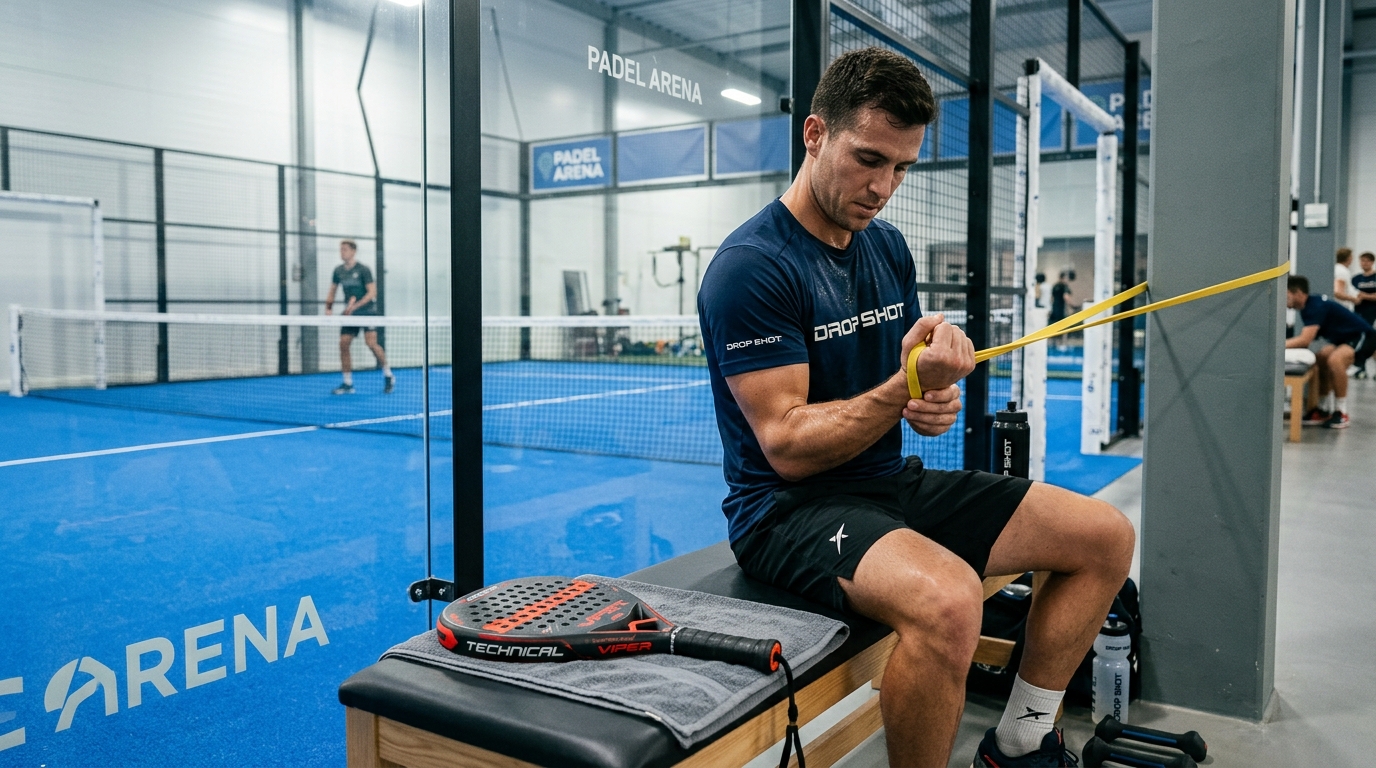
- Wrist & Forearm Rolls: Dynamic rotational wrist circles to stimulate synovial fluid and defend against padel elbow.
10 consecutive shadow padel split step repetitions with immediate explosive 2-step sprints in random directions; 6 shadow Bandejas rotating off imaginary corner walls.
Hold the padel racket horizontally and perform gentle, progressive 5-second isometric wrist holds against gentle opposite-hand resistance in both extension and flexion. This pre-activates the ECRB tendon without inducing fatigue, an essential step in padel injury prevention.
Post-Match Regeneration (The First 30 Minutes):
1. Do Not Sit Immediately: Walk for 3–5 minutes to allow lactic acid clearance and prevent blood pooling in the lower legs.
2. Targeted Foam Rolling: Roll the thoracic spine, gluteus medius, and calves to support padel injury prevention. Avoid rolling directly over inflamed tendons or bony protrusions.
3. Forearm Decompression: Gentle prolonged wrist extensor stretching (holding 30 seconds with a straight elbow) combined with hydration containing essential electrolytes (sodium, magnesium, potassium) to accelerate padel elbow recovery.
Frequently Asked Questions: Biomechanics, Padel Elbow & Injury Prevention
Can I wear running shoes or basketball shoes on a padel court?
No. Running shoes feature thick elevated heels and cushioned longitudinal channels engineered solely for straight-ahead heel-to-toe gait. They lack lateral sidewall stiffness, causing severe ankle rollover risks during the padel split step. Furthermore, their rubber soles lack sand-displacement grooves, causing either dangerous sliding or sudden joint-twisting turf catches. Dedicated padel or clay-court tennis shoes are mandatory for effective padel injury prevention.
Why do my knees ache after playing on indoor padel turf?
Knee soreness is typically patellar overload caused by defending low wall bounces solely by bending the knees forward over the toes without hinging at the hips. When you squat without hip recruitment, patellar tendon load spikes by over 300%. Strengthen your gluteus medius and hamstrings, apply proper padel biomechanics to your ready position, and ensure your footwear has circular pivot discs to reduce rotational knee friction.
Does a heavier padel racket worsen or help padel elbow?
It depends entirely on weight distribution (balance). A heavier racket with a low balance (handle-heavy) actually absorbs shock waves better than an ultra-light racket, sparing the elbow. Conversely, an ultra-light racket forces the player to muscle their swing to generate ball speed, causing high joint stress. A racket weighing 360g–365g with an even or low balance is the sweet spot for padel elbow prevention.
How do I know if my padel split step timing is flawed?
If you frequently feel "heavy-footed" or react a split-second too late to passing shots, your feet are landing before your opponent strikes the ball, meaning your dynamic elasticity has already dissipated. Video-record yourself from the back glass: your feet should be at the peak of their small hop right as the opponent strikes, touching the turf immediately after they make contact. Practicing dedicated padel footwork drills will quickly calibrate this internal reflex.
Ready to Put These Mechanics Into Practice?
Explore our comprehensive stroke tutorials, test equipment specs, and rehearse tactical scenarios on our interactive 2D court simulator.